Sketches Of The Sun, 04 June 2023 - 11 October 2026
Introduction
Sketches of the solar disk by Neil Morley and Martin Cook are below. For comparison, corresponding images by the US NSO (National Solar Observatory) GONG (Global Oscillation Network Group) and, occasionally, other sources, are also shown.
Photographs of the telescopes used by Neil, together with a description of his sketching technique, are at the bottom of the page.
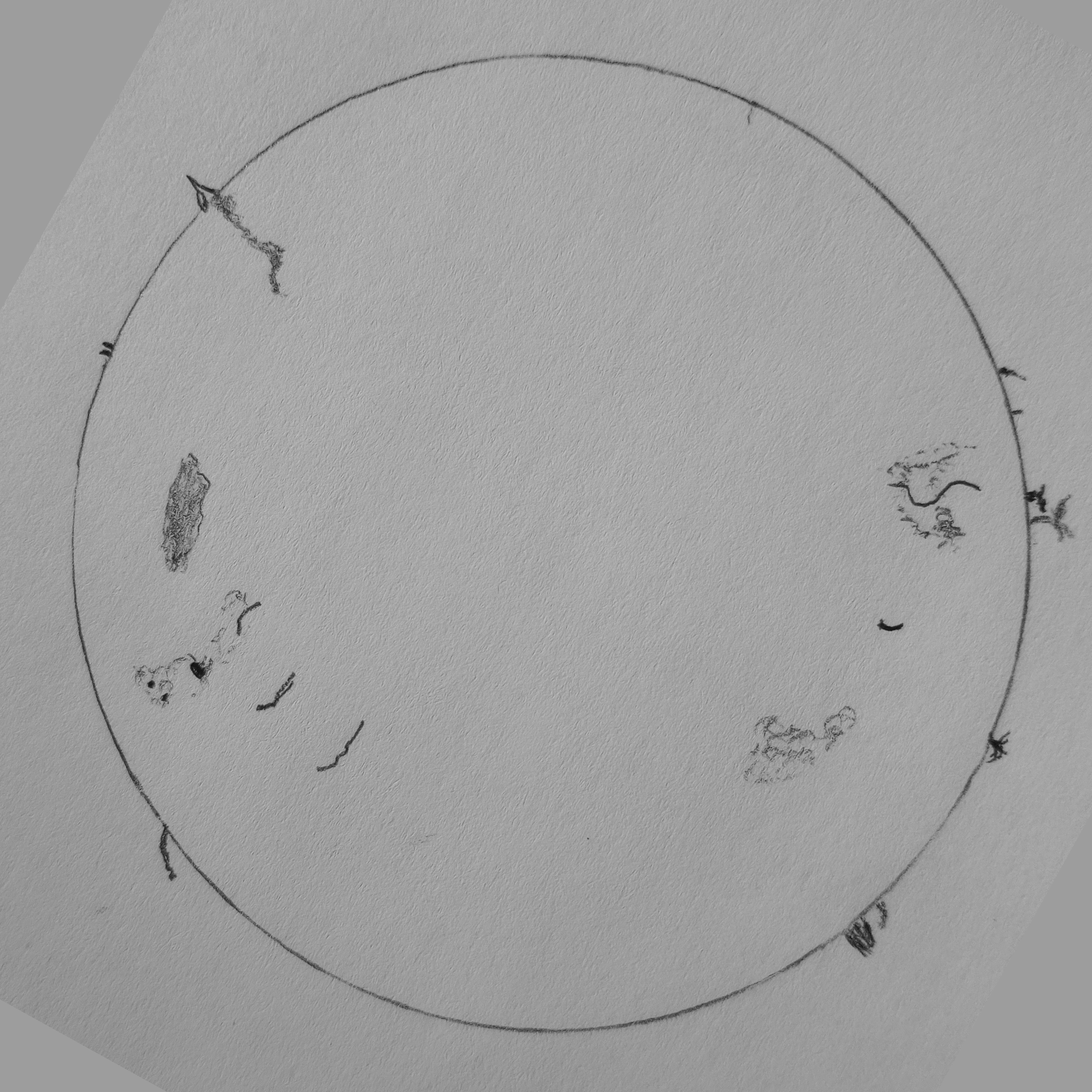
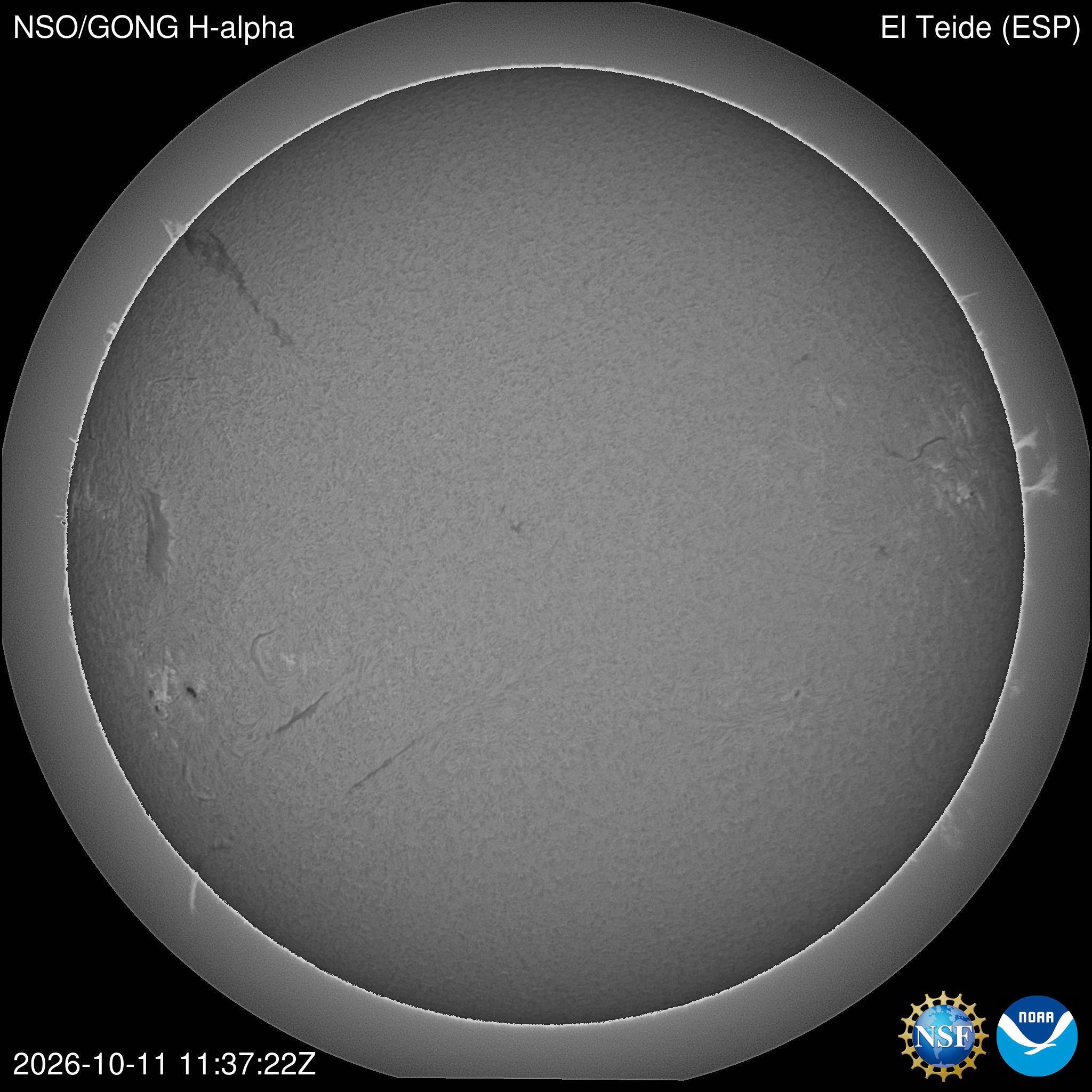
Neil Morley, 11 October 2026, 11:05 - 11:20 UT
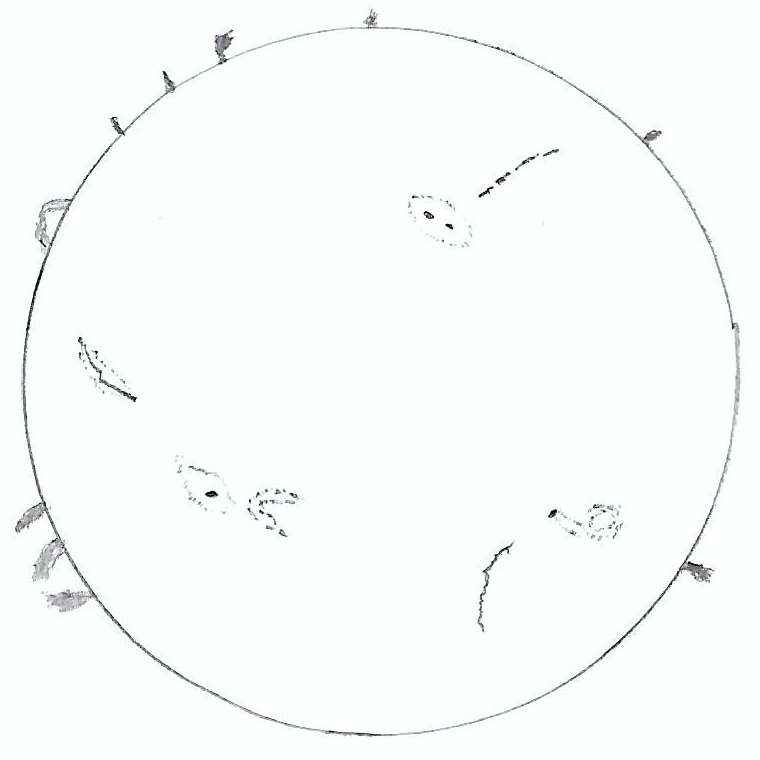
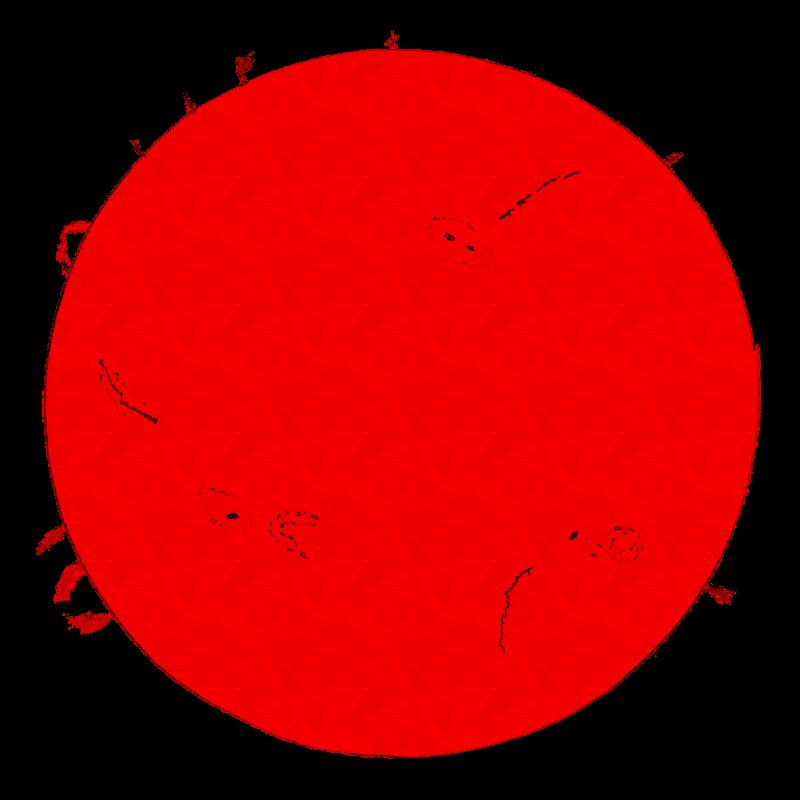
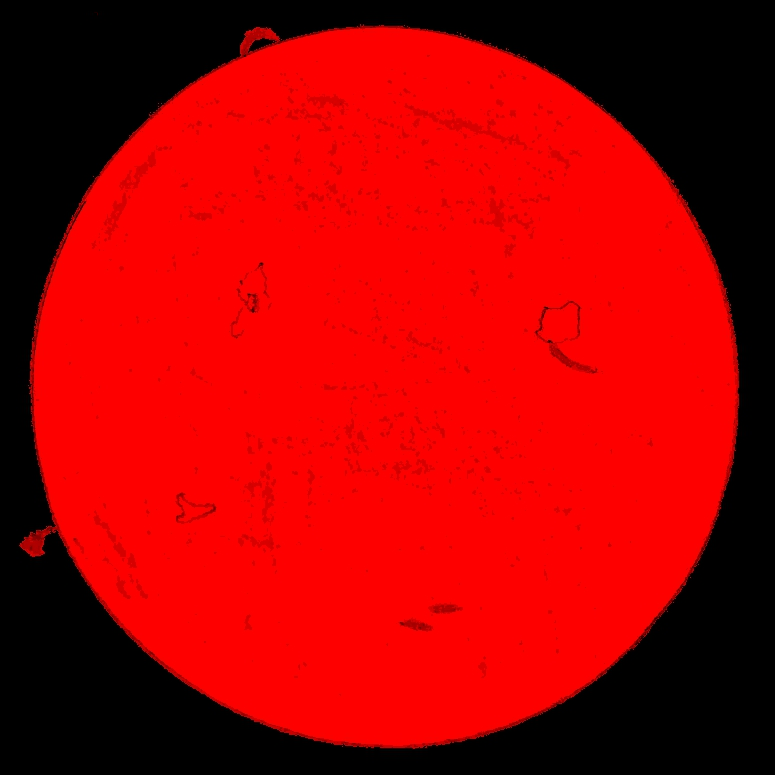
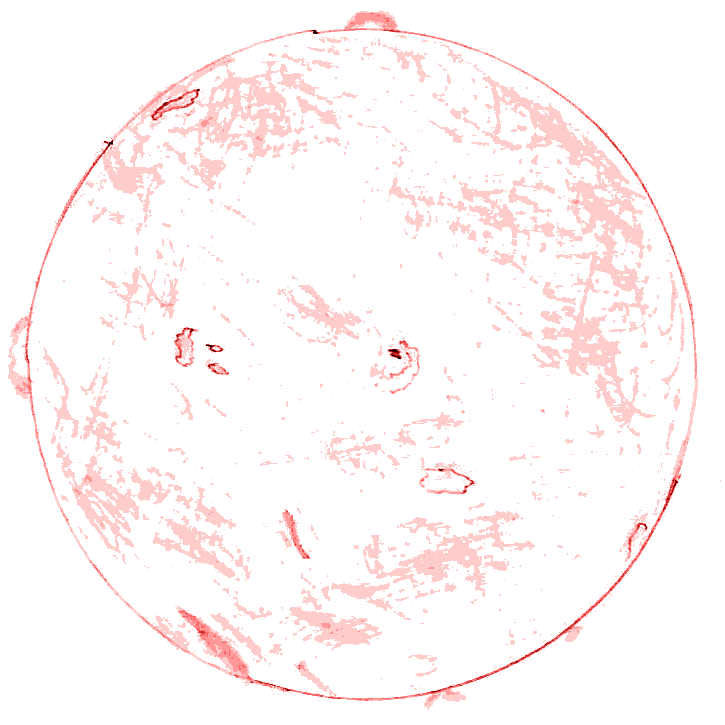
Below left: a sketch completed using the Lunt LS35 with 20 mm Plössl eyepiece providing a magnification of 20x. This is the first sketch made since the original Lunt blue filter was replaced with a BelOptik UV/IR on Schott KG5 glass. The new filter maintains eye safety while providing a brighter image, on a par with OASI's Coronado PST following its repair. The brighter image allows higher magnifications when needed. Below right: the corresponding GONG image.
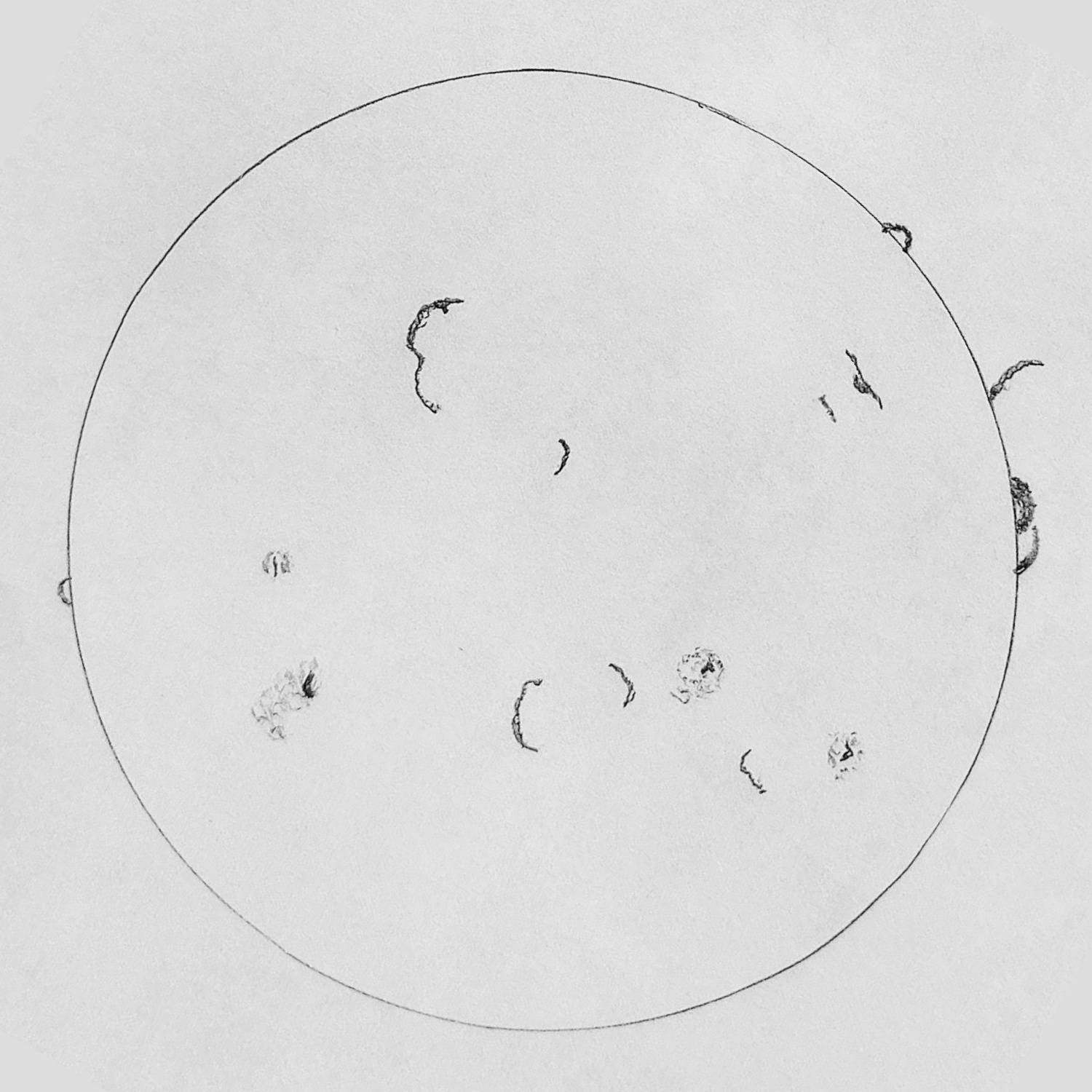
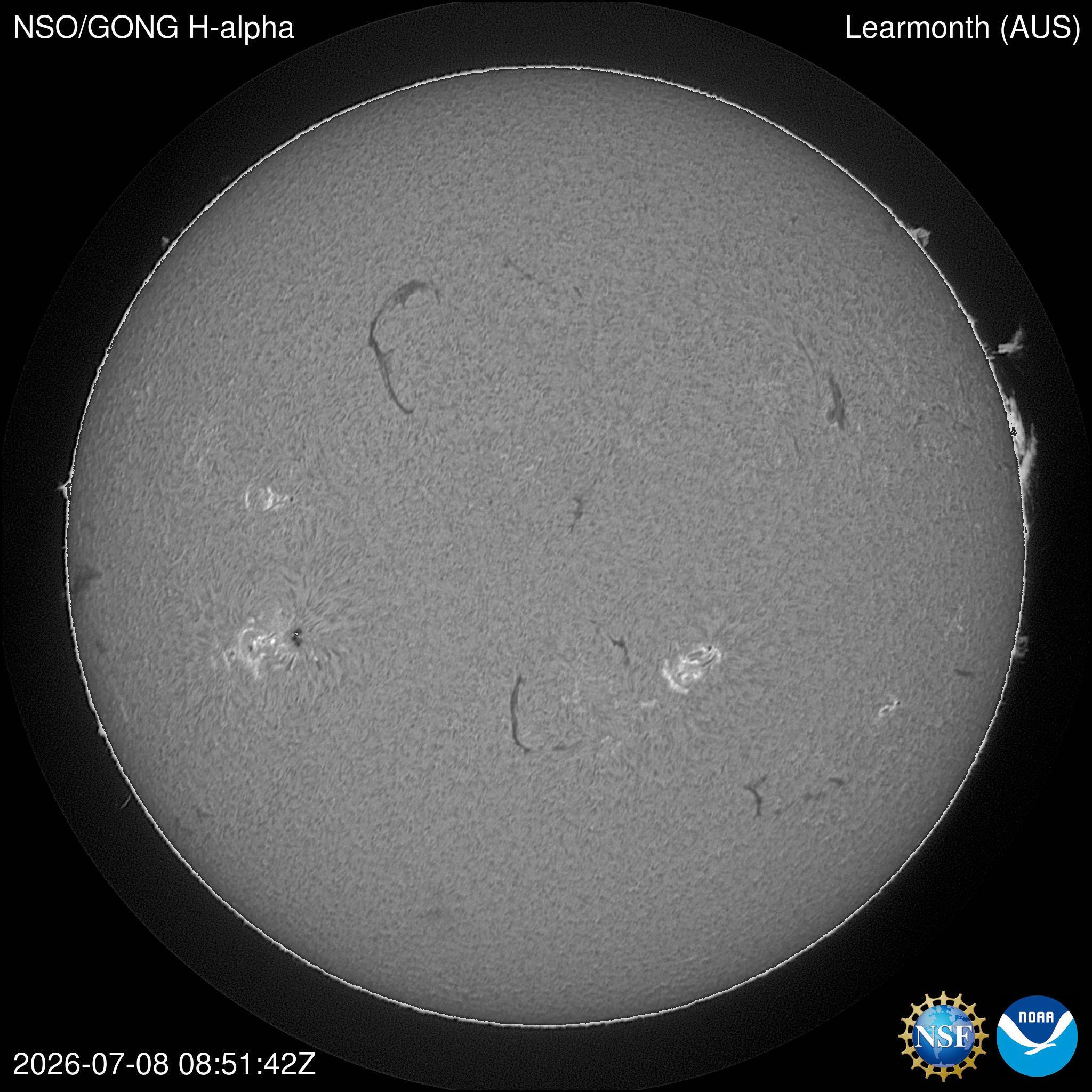
Neil Morley, 08 July 2026, 05:55 - 06:10 UT
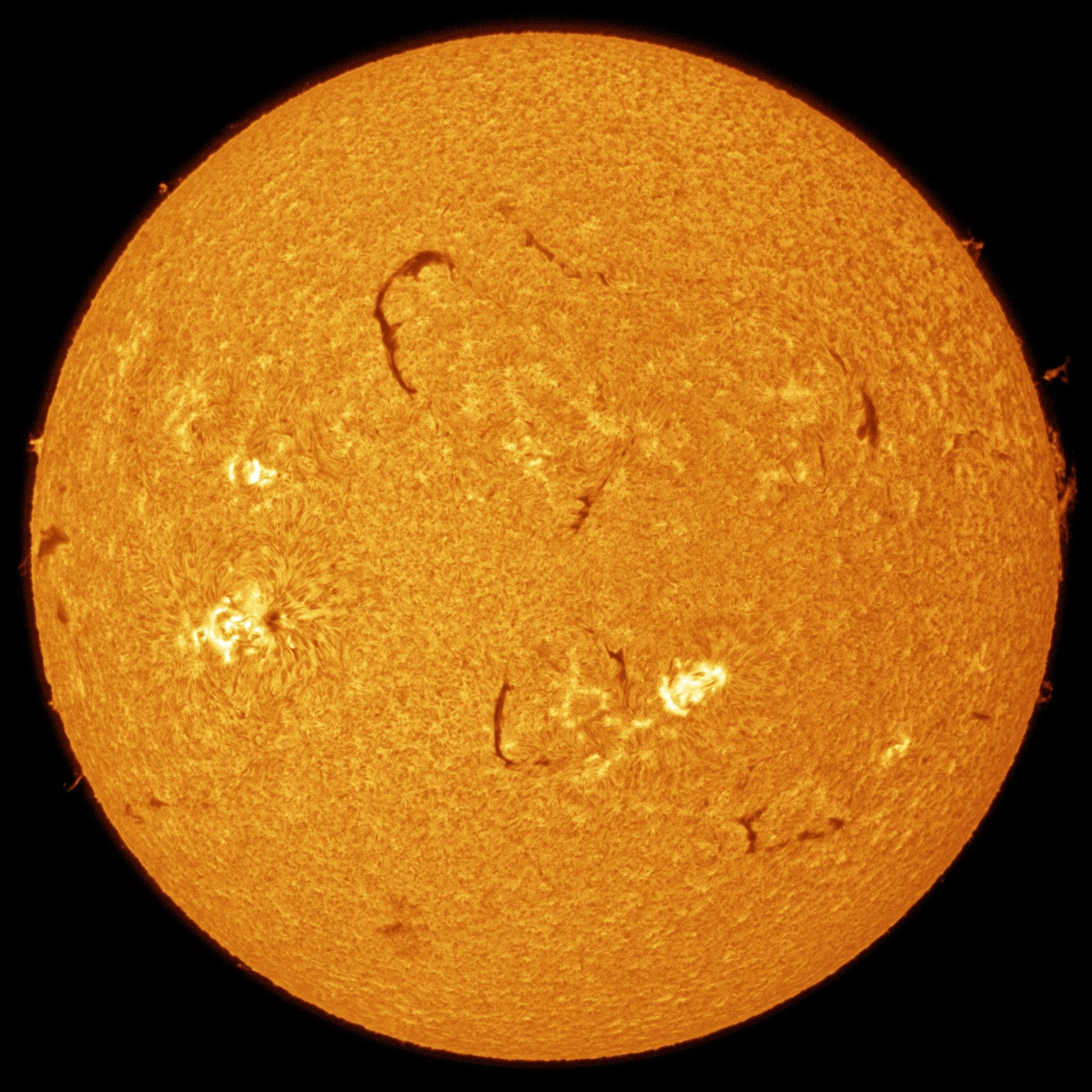
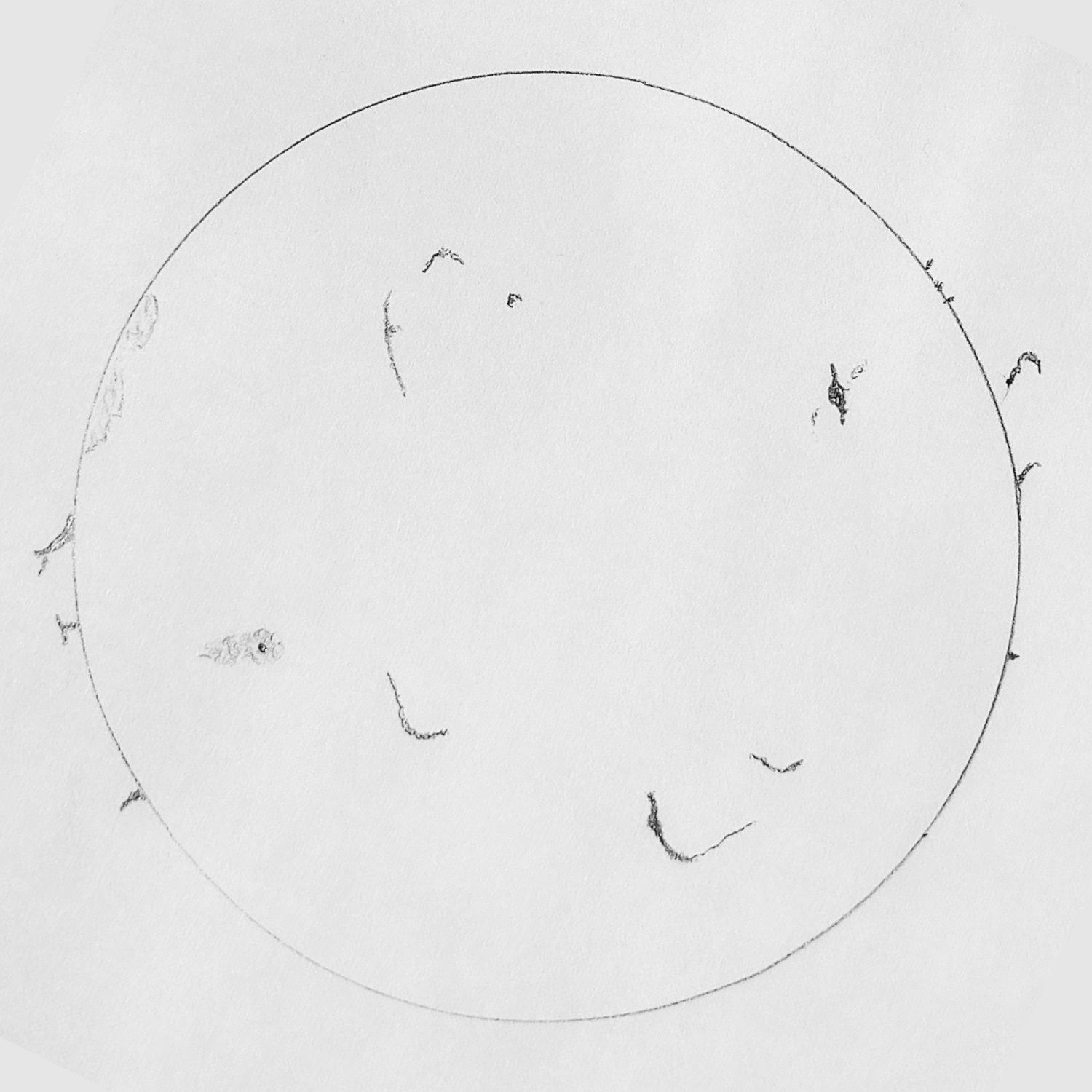
Below left: a sketch (using a 2B pencil on standard printer paper) completed using OASI's PST with a 20 mm Plössl eyepiece, showing the full disk at magnification 20x. Compared to images from the last two days, the darkened region associated with the "hedgerow" prominence has disappeared, and was not visible despite a careful search. Centre: the corresponding GONG image, courtesy of the Learmouth observatory in Australia. The darkened region associated with the large "hedgerow" prominence is still visible around the 9 o'clock position, but has significantly reduced in size. Below right: an Hα image by OASI member Steve McElvanney using a Skywatcher Heliostar 76 telescope and ASI 585 mono camera.
Neil Morley, 07 July 2026, 09:35 - 09:50 UT
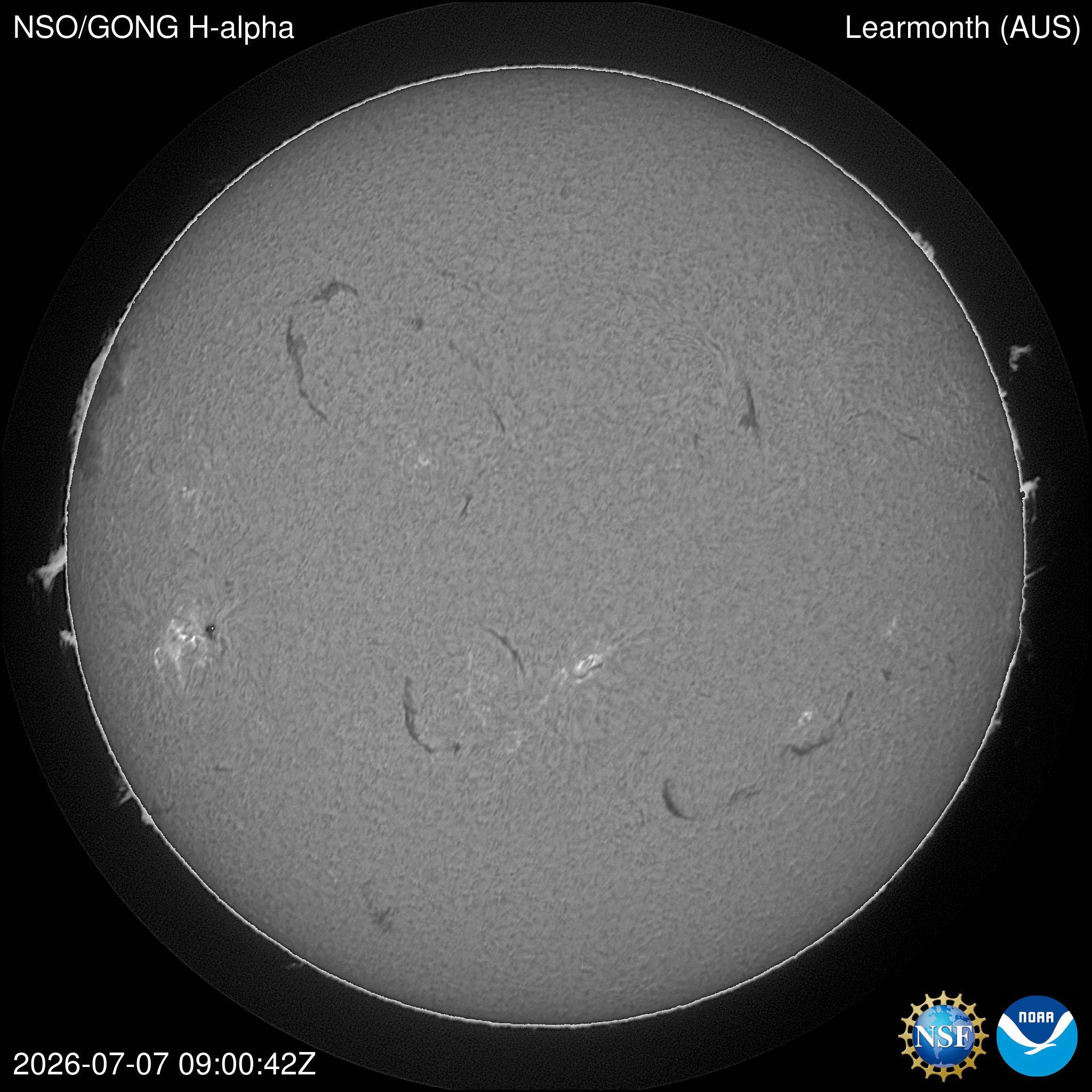
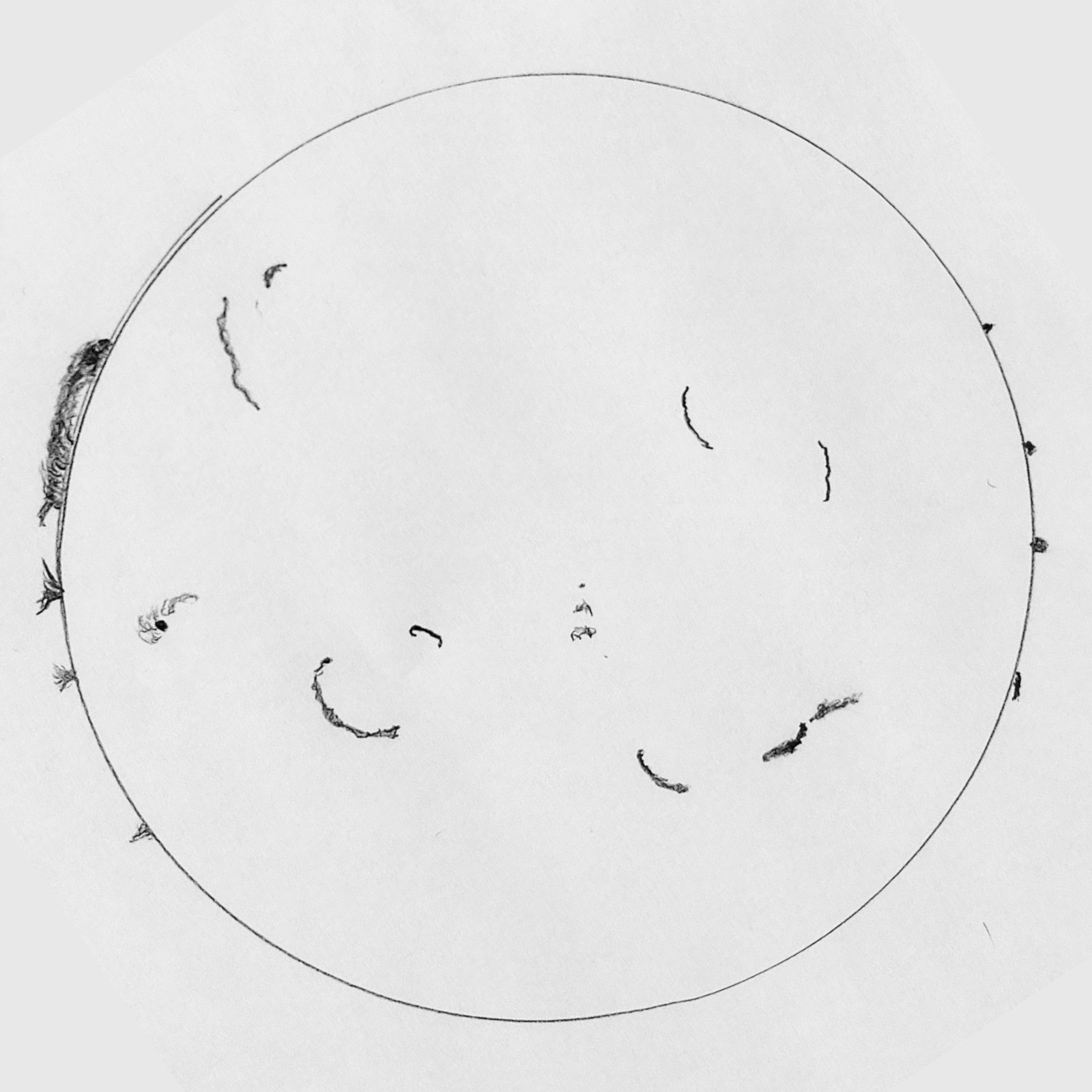
Below left: a sketch completed using OASI's PST with a 20 mm Plössl eyepiece, showing the full disk at magnification 20x. Compared to yesterday's image, the rotation of the Sun has brought the impressive "hedgerow" prominence onto the surface of the disk at the 9 o'clock position, where it is visible as a darkened region. There were no signs of the prominence showing beyond the limb. There is a detached prominence around the 2 o'clock position. Below right: the corresponding GONG image.
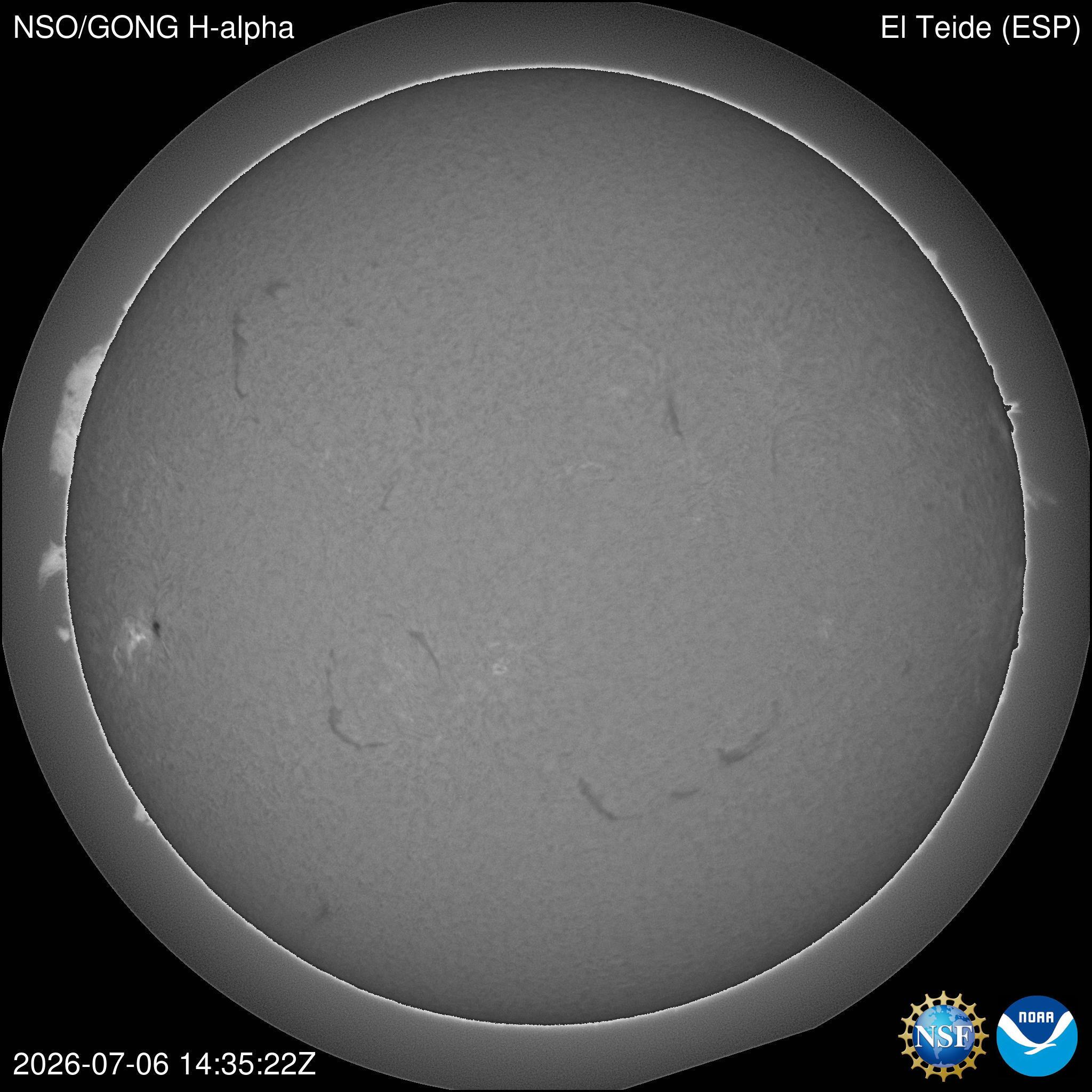
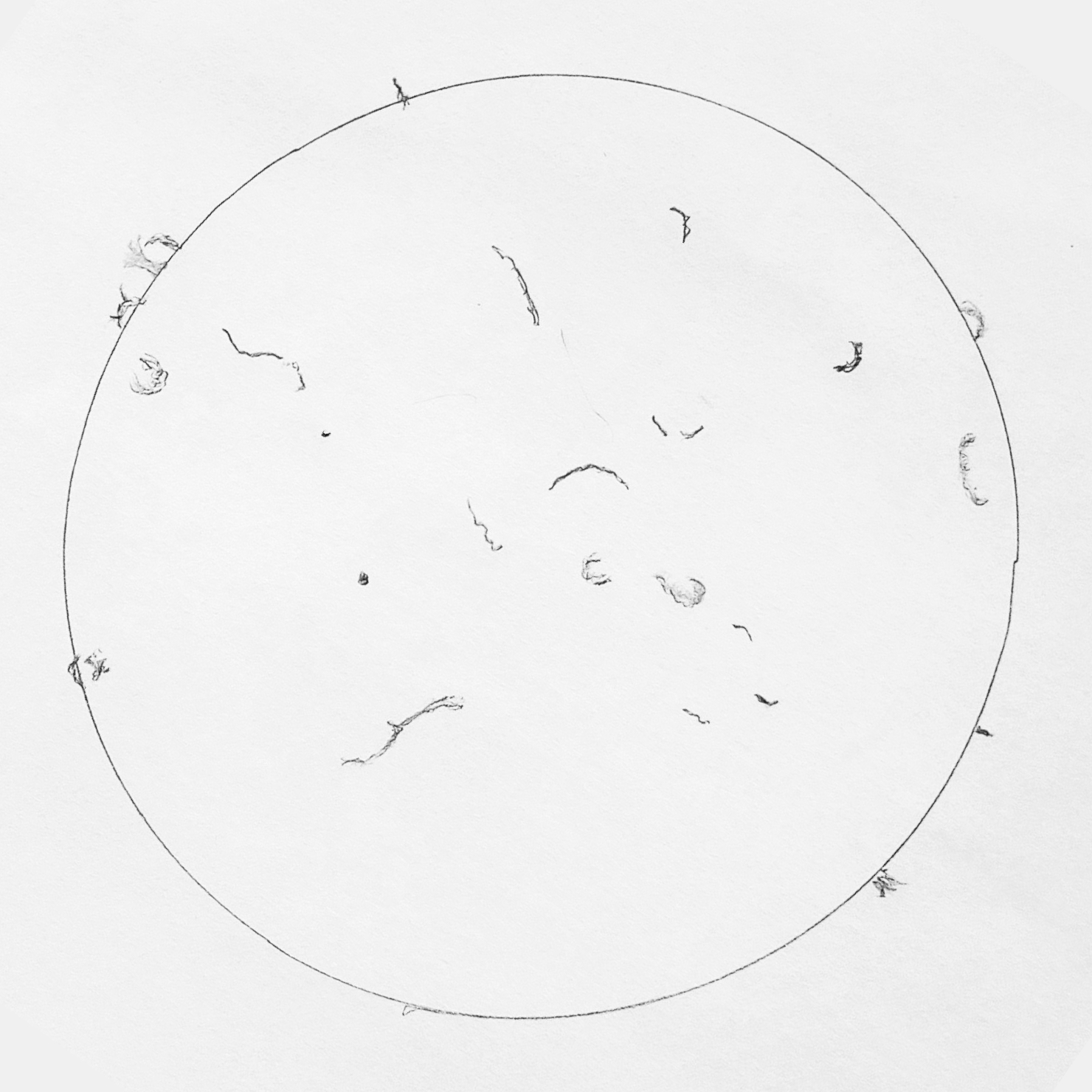
Neil Morley, 06 July 2026, 14:05 - 14:20 UT
Below left: a sketch completed using OASI's PST with a 20 mm Plössl eyepiece, showing the full disk at magnification 20x. The Sun shows significant activity with multiple filaments. The latter appear as prominences when viewed on the limb, and there is a particularly impressive "hedgerow" prominence at the 9 o'clock position. Below right: the corresponding GONG image.
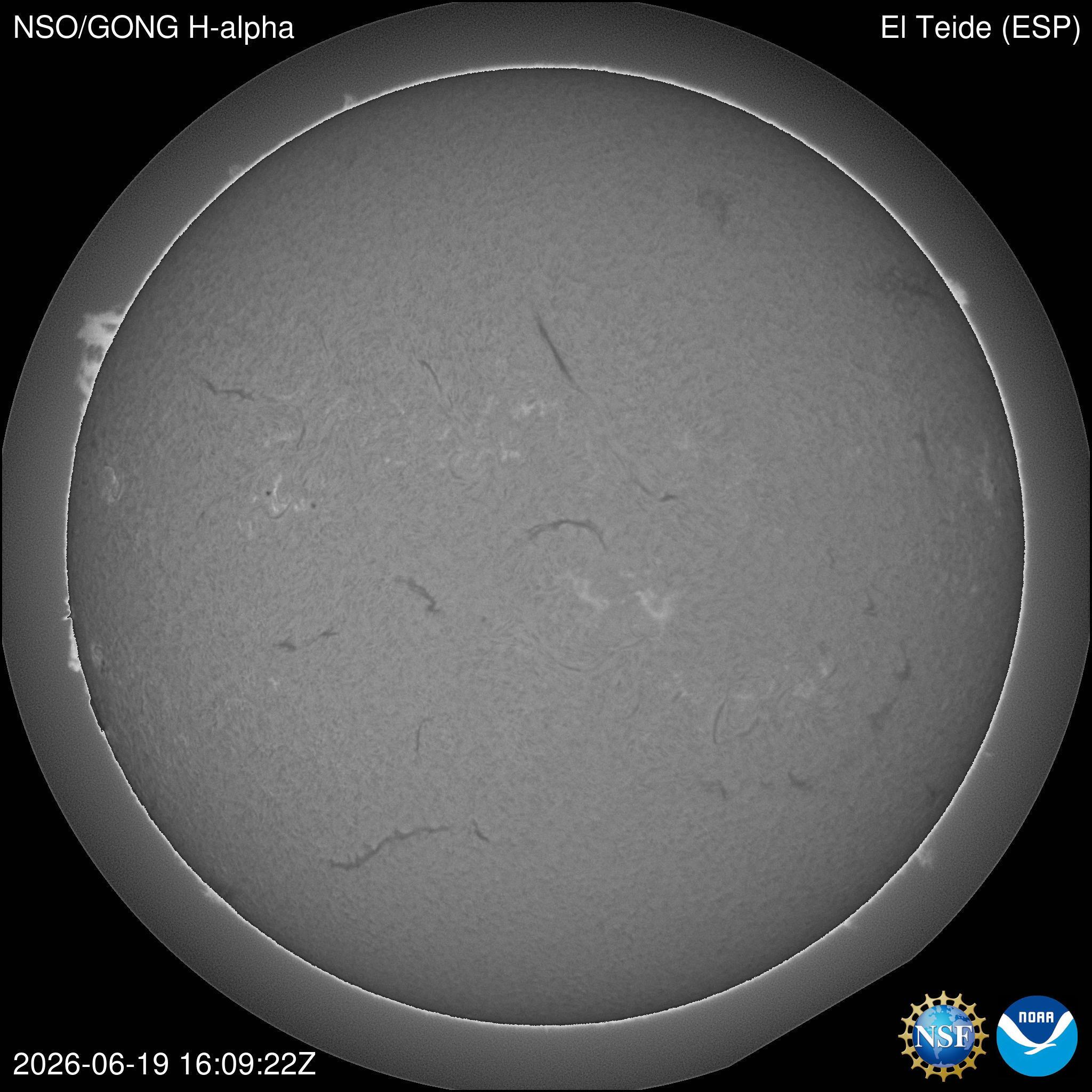
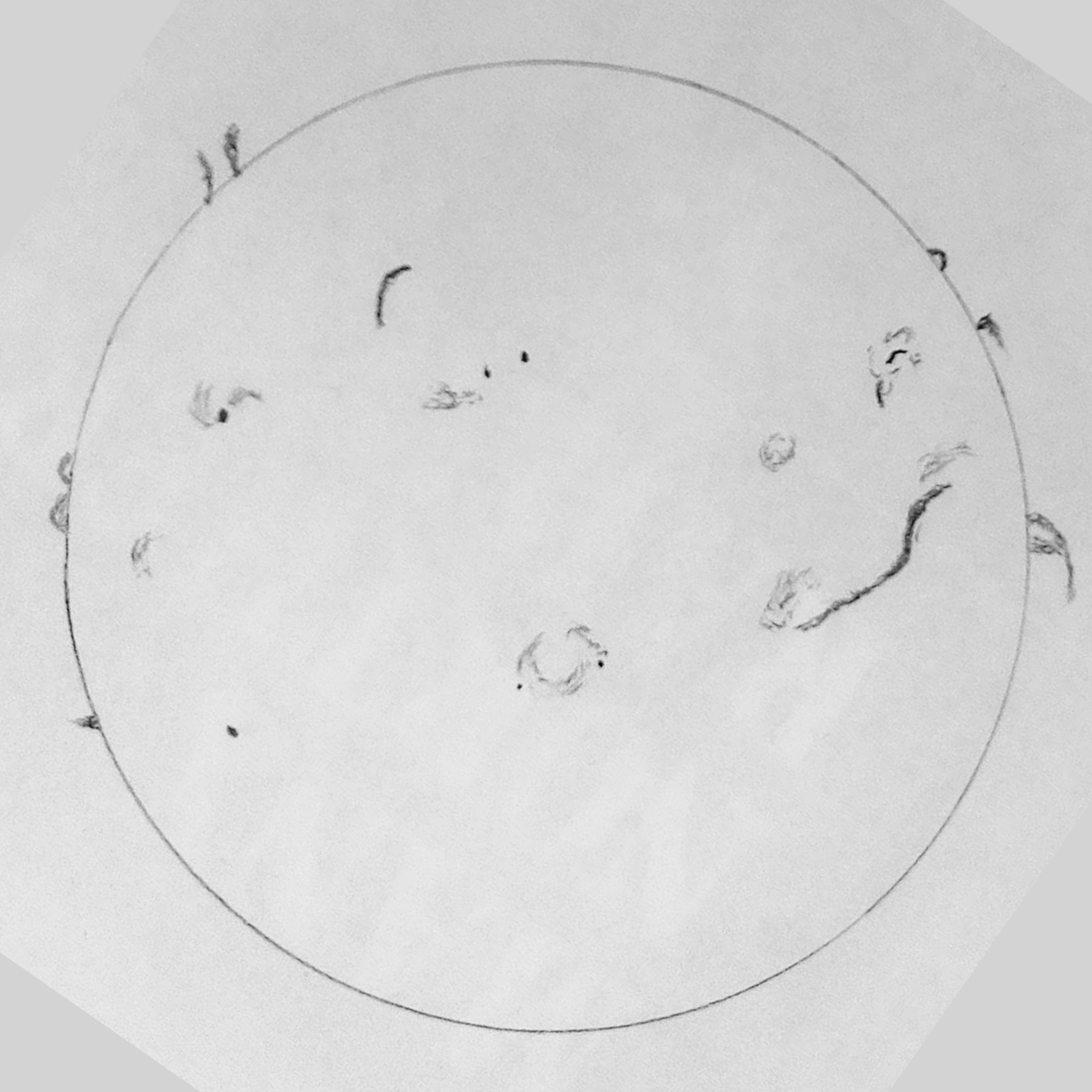
Neil Morley, 19 June 2026, 15:35-15:50 UT
Below left: a sketch completed using OASI's PST with a Baader Mk IV Zoom eyepiece at the 20 mm setting providing magnification of 20x. Few sunspots were visible but there were some prominences at the edge of the disk and many filaments. Below right: the corresponding GONG image.
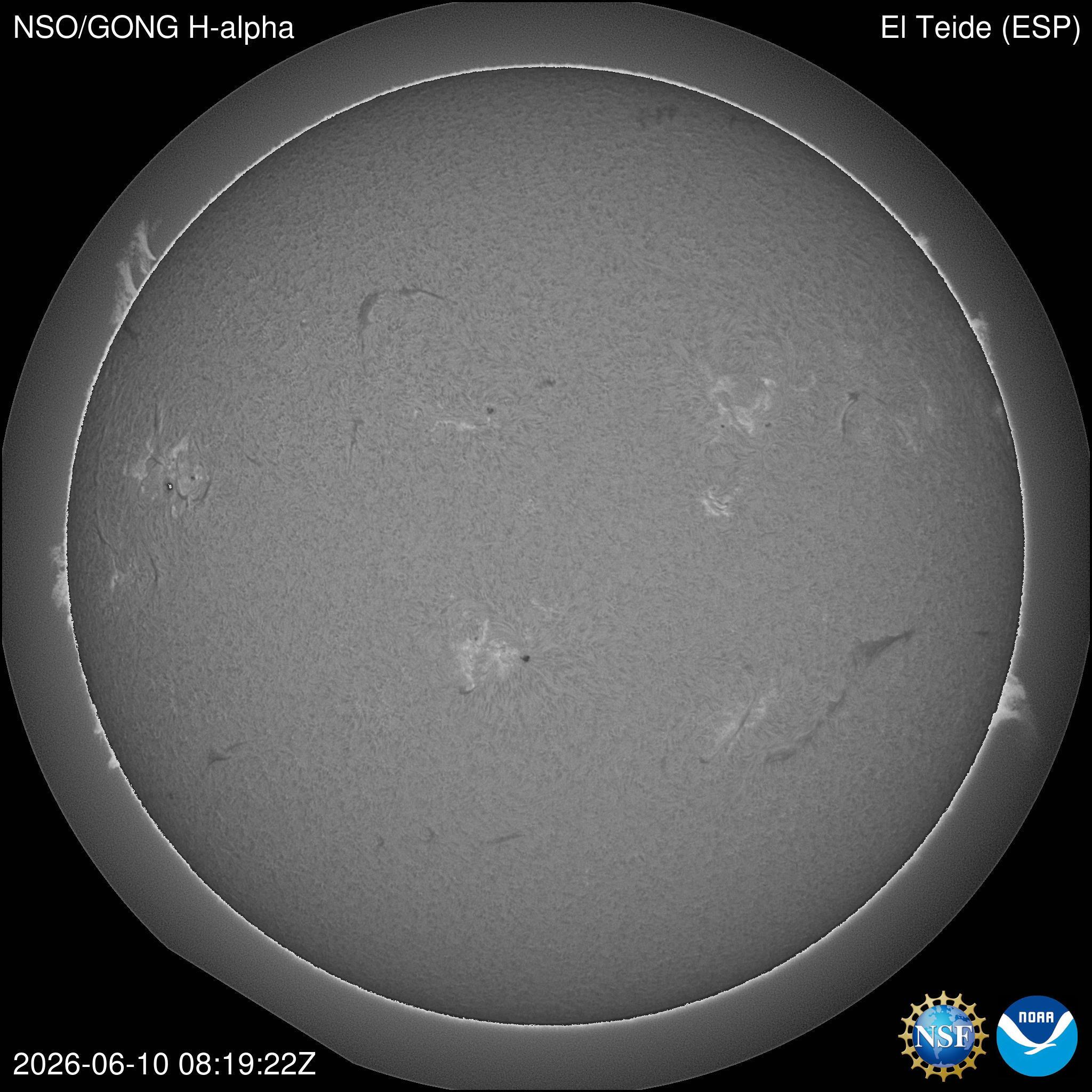
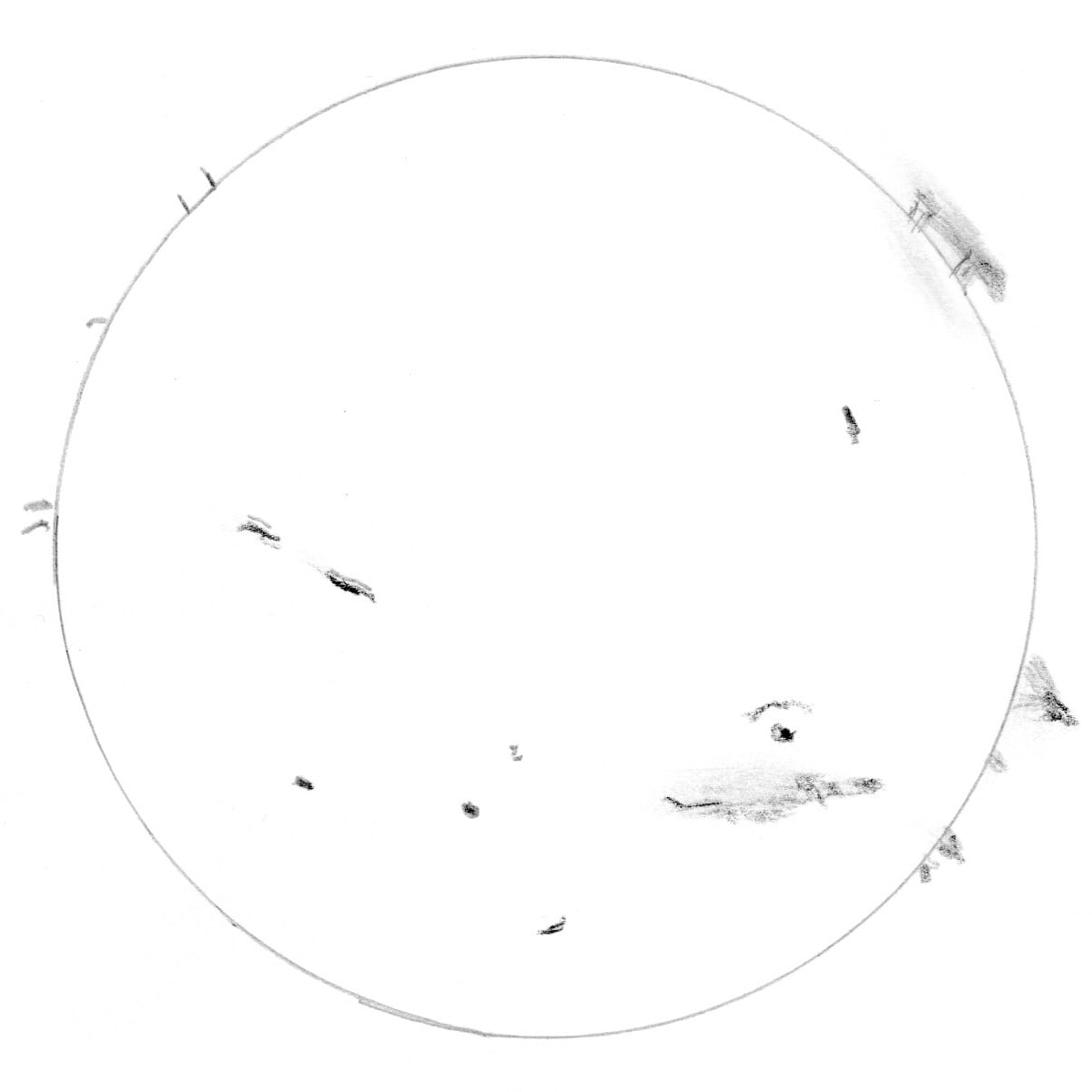
Neil Morley, 10 June 2026, 07:45-08:05 UT
Below left: a sketch completed using OASI's PST with a Baader Mk IV Zoom eyepiece at the 24 mm and 20 mm settings providing magnifications of 17x and 20x. Observing conditions were challenging, with variable cloud cover! Below right: the corresponding GONG image.
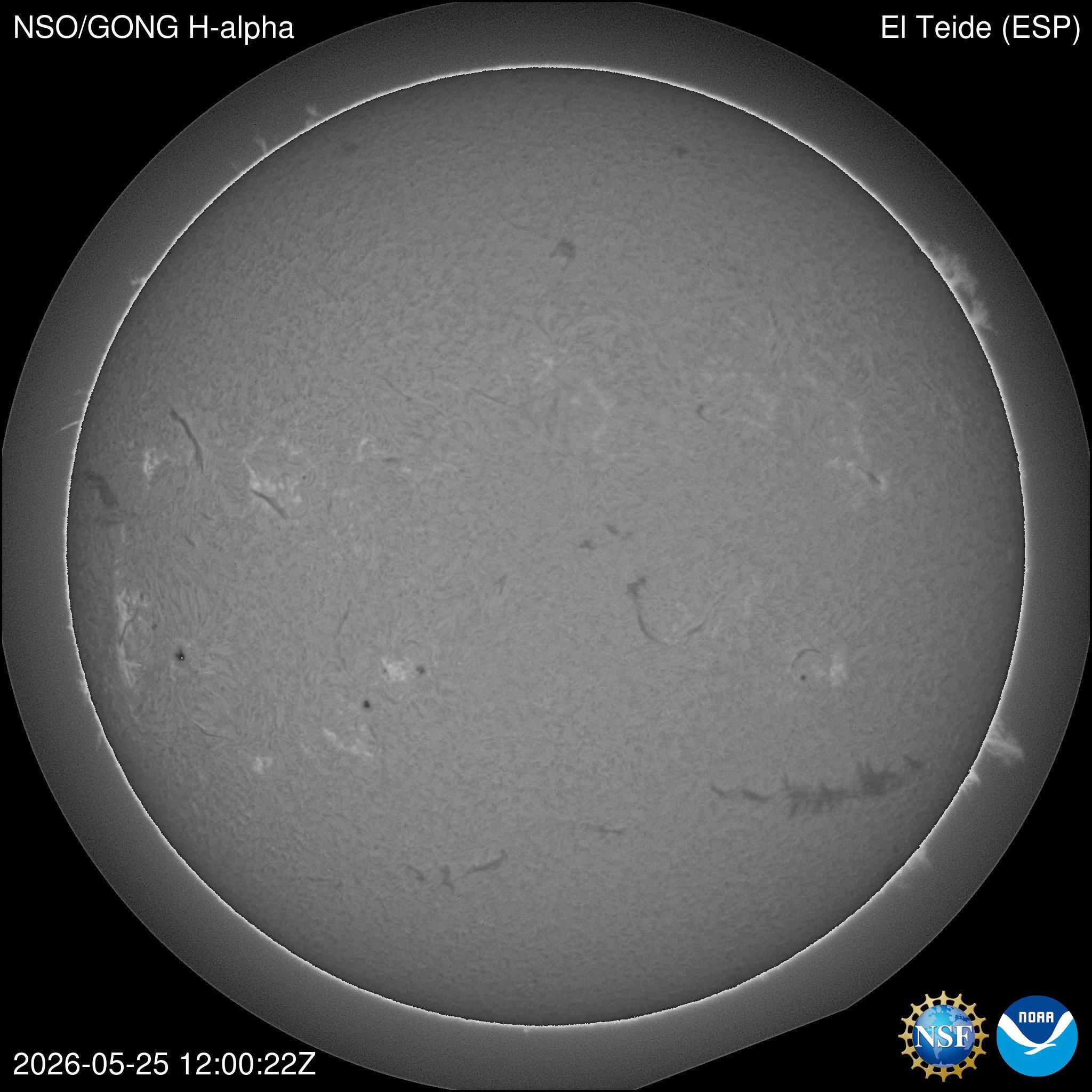
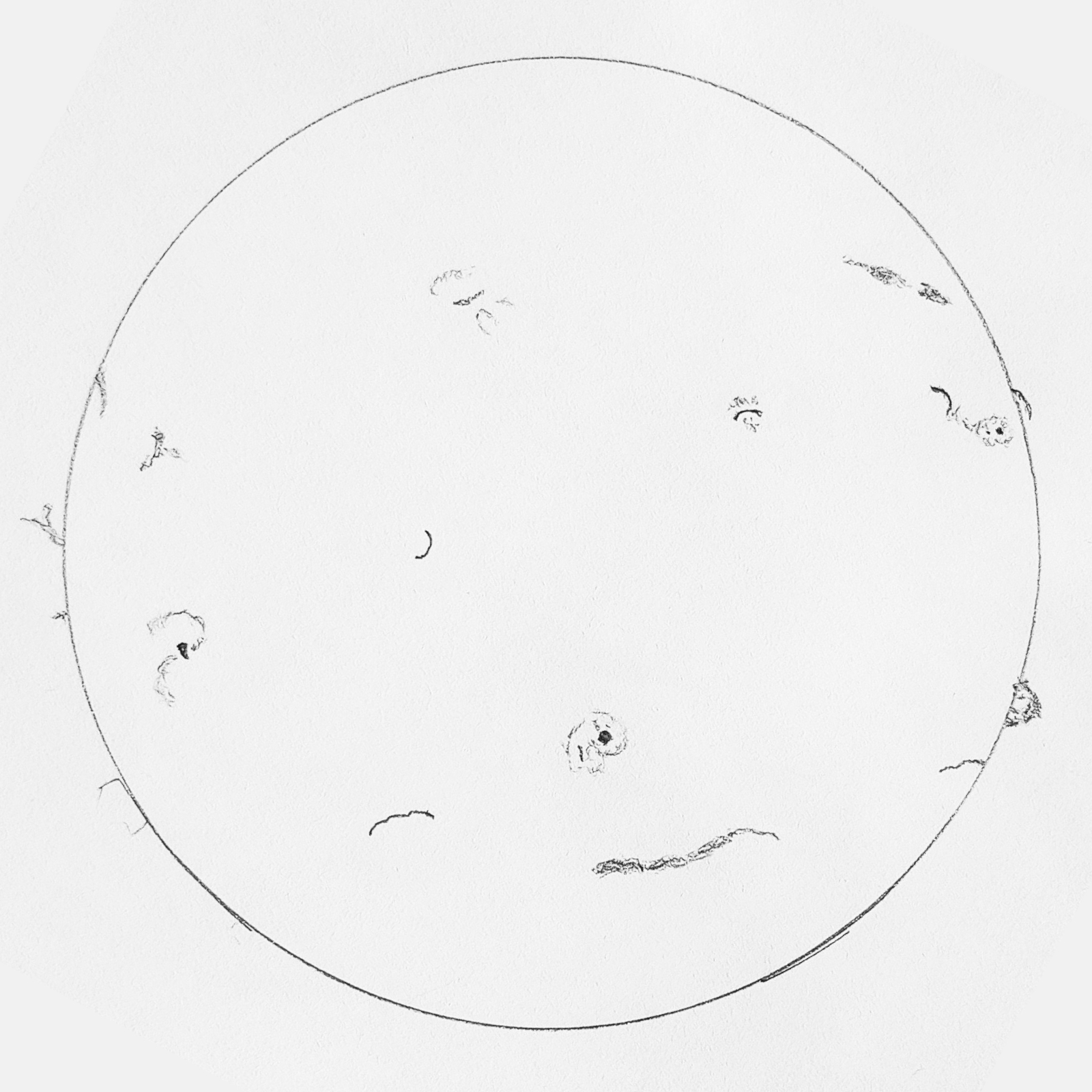
Martin Cook, 25 May 2026, 11:00 UT
Below left: a sketch made at the eyepiece of a Lunt LS60THa/B1200 telescope. (The sketch was made by Martin as Neil was away.) Below right: the corresponding GONG image.
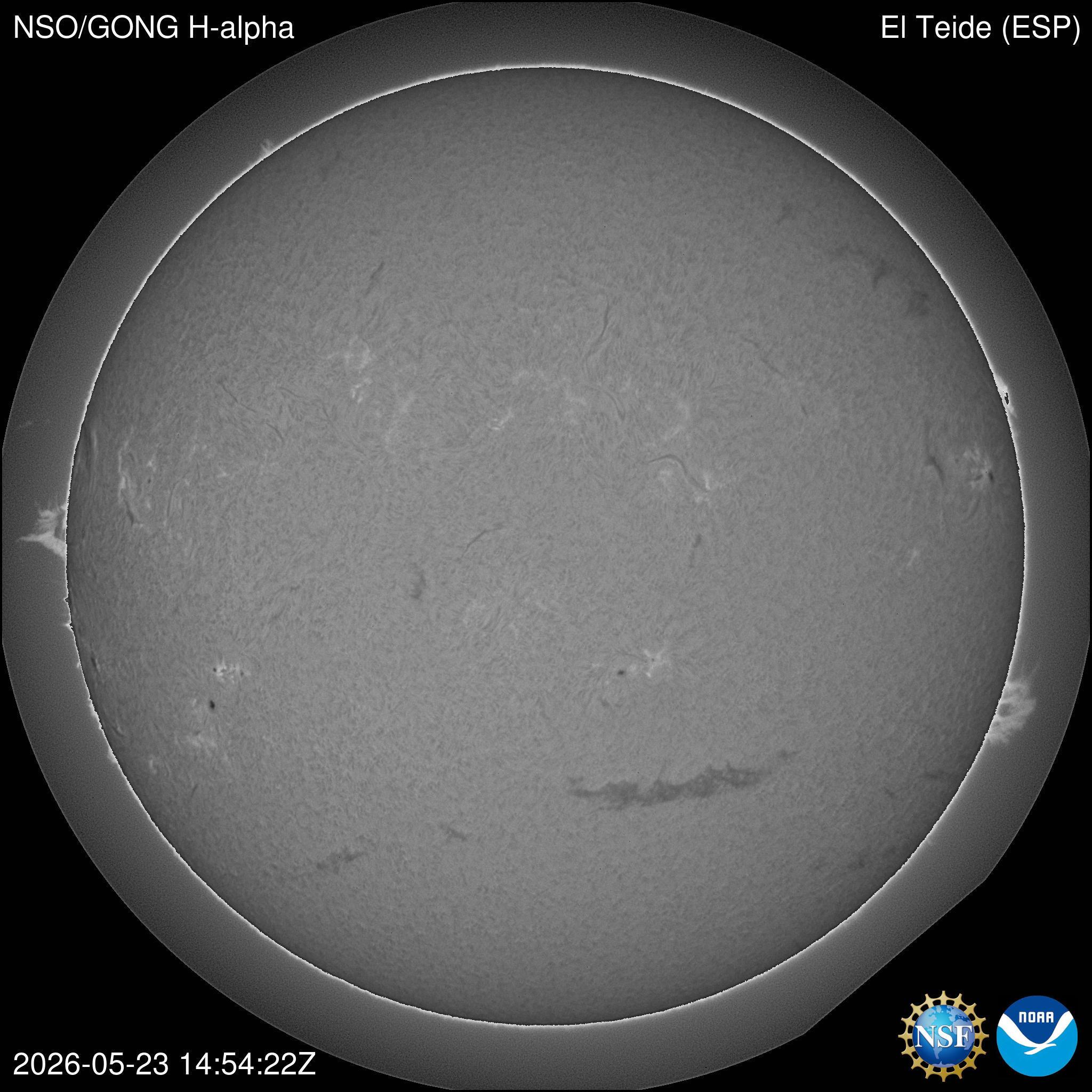
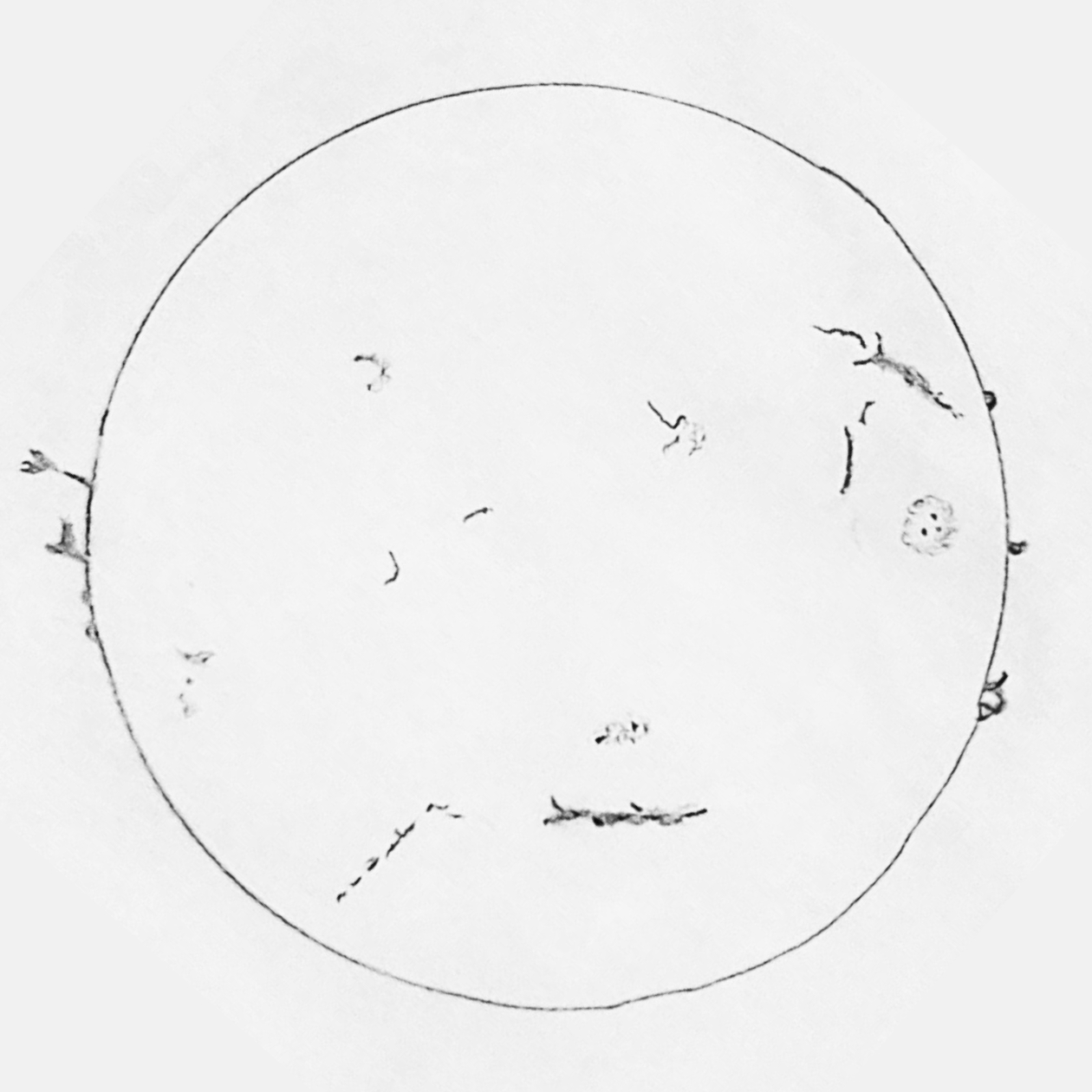
Neil Morley, 23 May 2026, 15:05-15:20 UT
Below left: a sketch completed using the Lunt LS35 with 20 mm Plössl eyepiece providing a magnification of 20x. Despite the extra haze and occasional clouds, more details were visible today than yesterday and sketching proved less of a struggle! Below right: the corresponding GONG image.
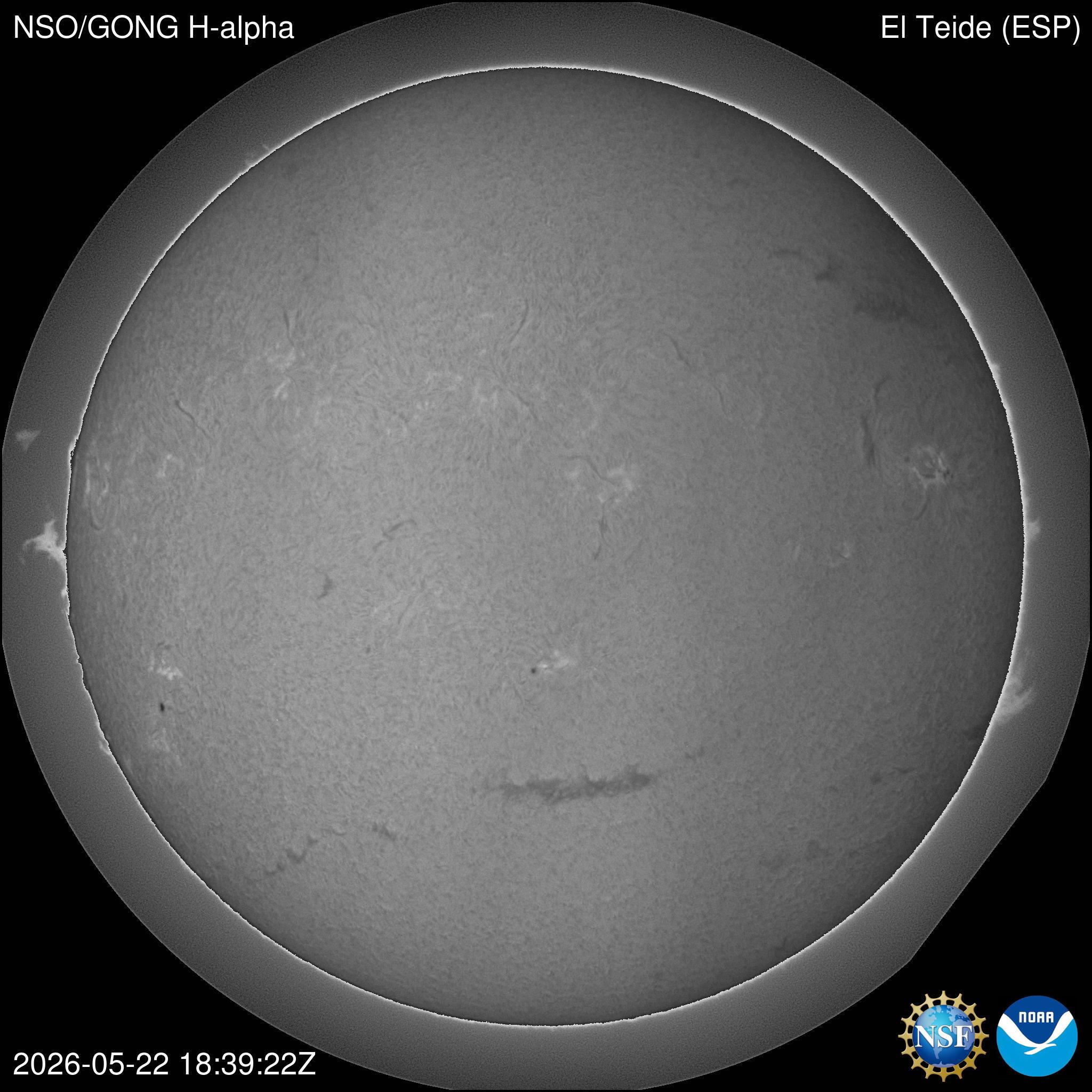
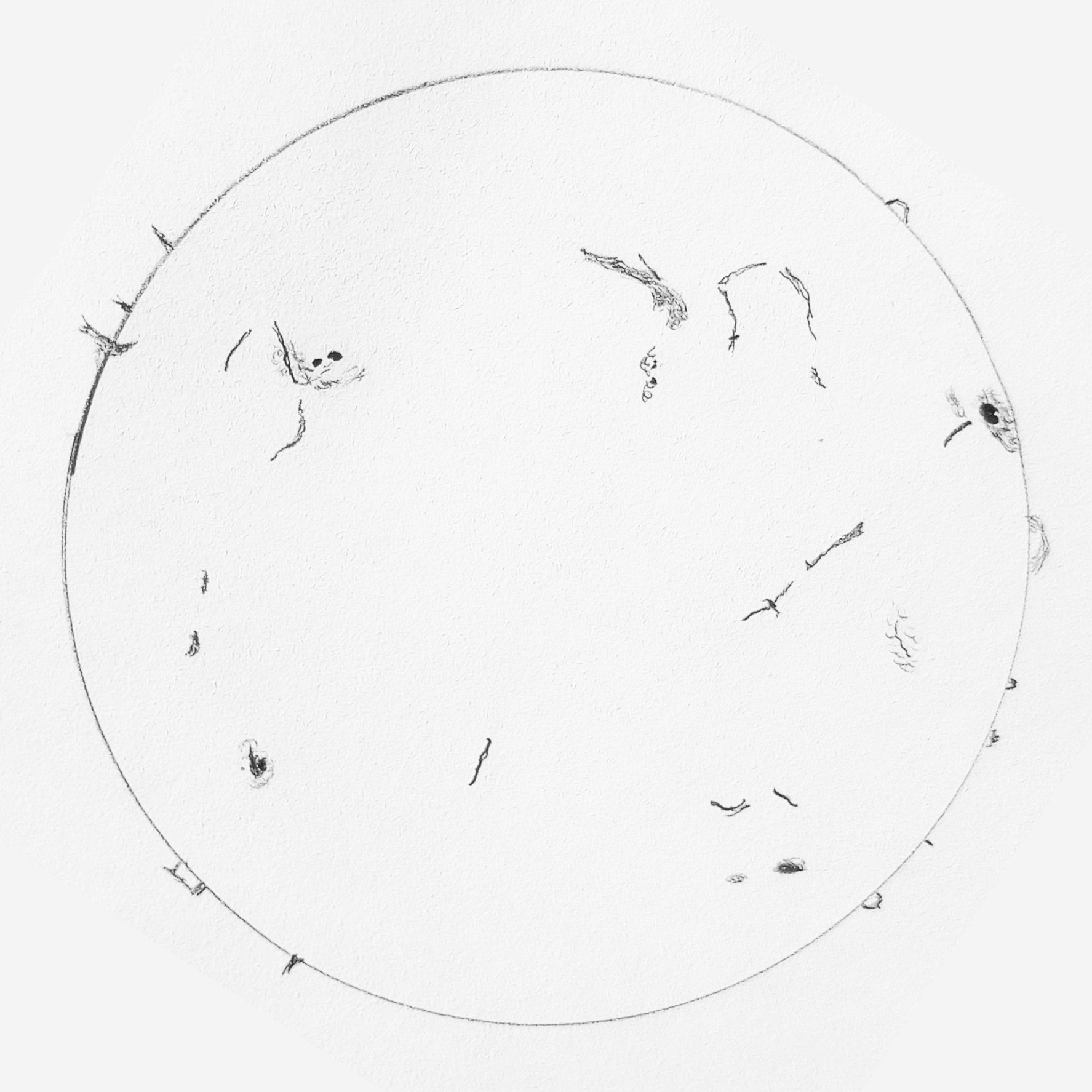
Neil Morley, 22 May 2026, 18:15-18:30 UT
Below left: a sketch completed using the Lunt LS35 refractor with SVBONY SV135 7-21mm zoom eyepiece at settings of 21 mm and 18 mm, providing magnifications of 19x and 22x. The image produced by the Lunt LS35 is dimmer than those produced by the Coronado PST and SolarMax II refractors; this makes details difficult to see at magnifications significantly higher than those used today. Matters were also not helped by the fact that the Sun was at low elevation, meaning that its light had to traverse more of Earth's atmosphere. Below right: the corresponding GONG image.
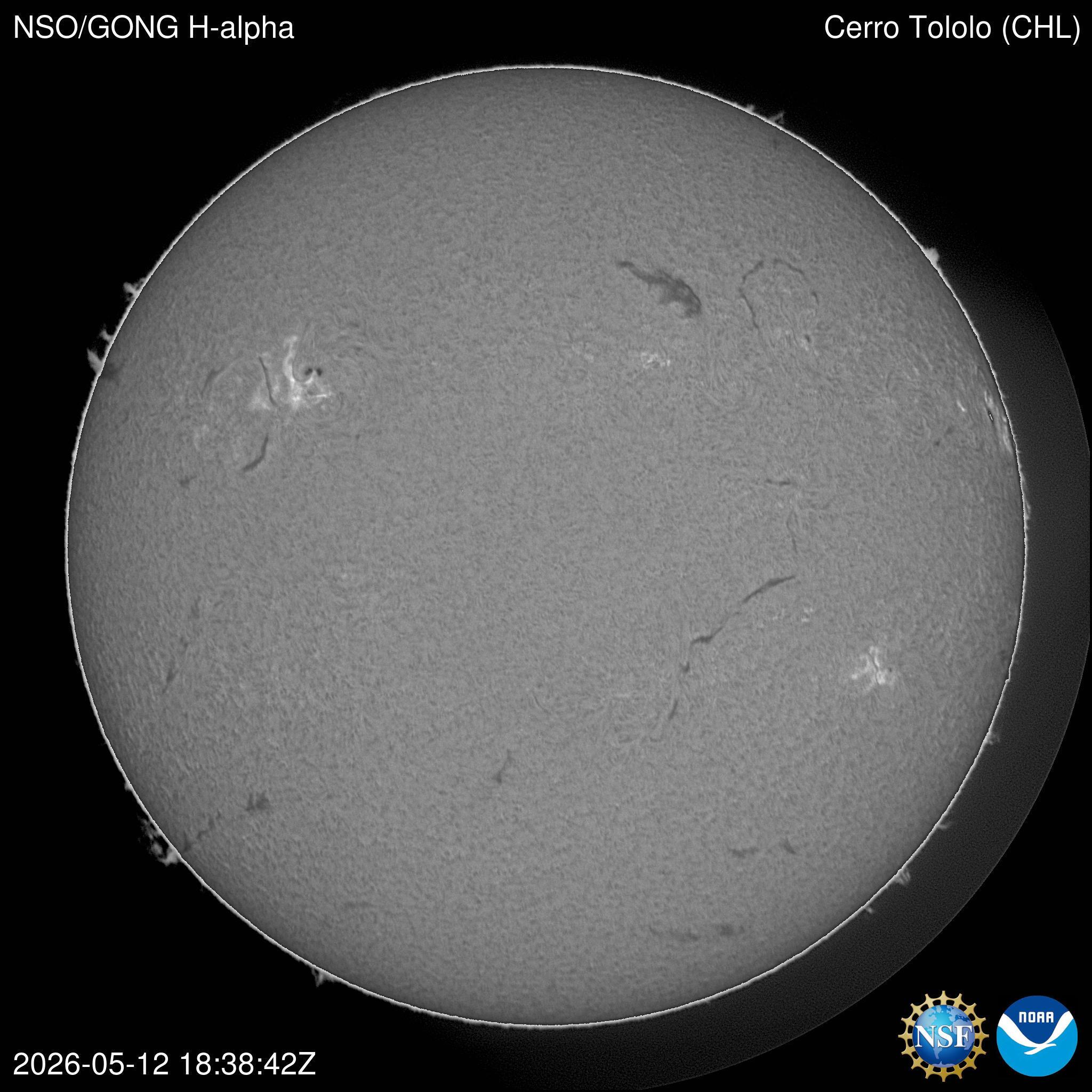
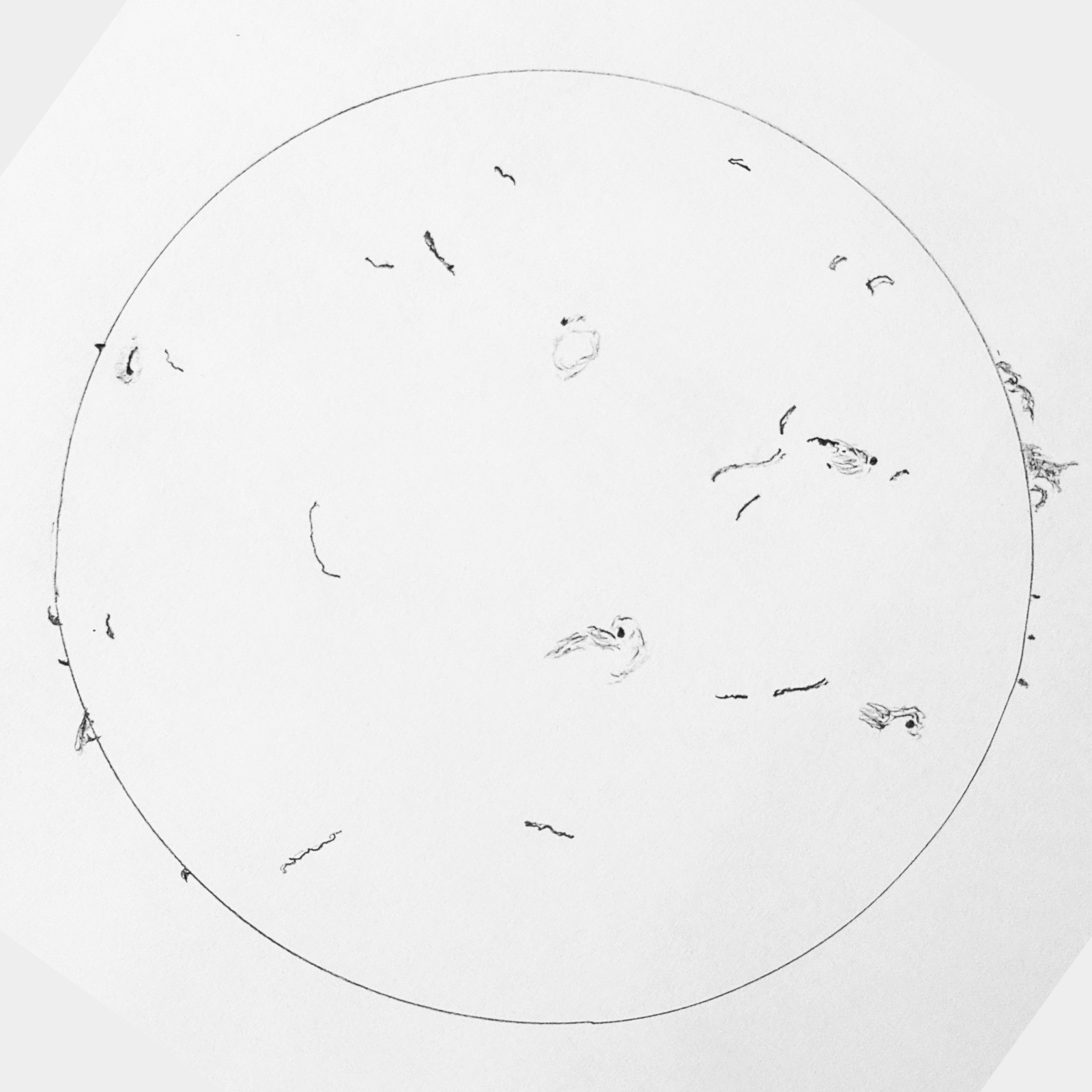
Neil Morley, 12 May 2026, 17:35-17:50 UT
Below left: a sketch drawn at the eyepiece of the Coronado PST. I used a Baader Mk. IV Hyperion 8-24 mm zoom eyepiece at the 14 mm setting, providing a magnification of 30x and a view of the full solar disk. The sketch was drawn after rain cleared around 17:00, with the PST set up in the entrance of the garage, facing west. The location provided some added shade, helping to reduce glare and increase the contrast of fainter features visible on the solar disk. Below right: the corresponding GONG image.
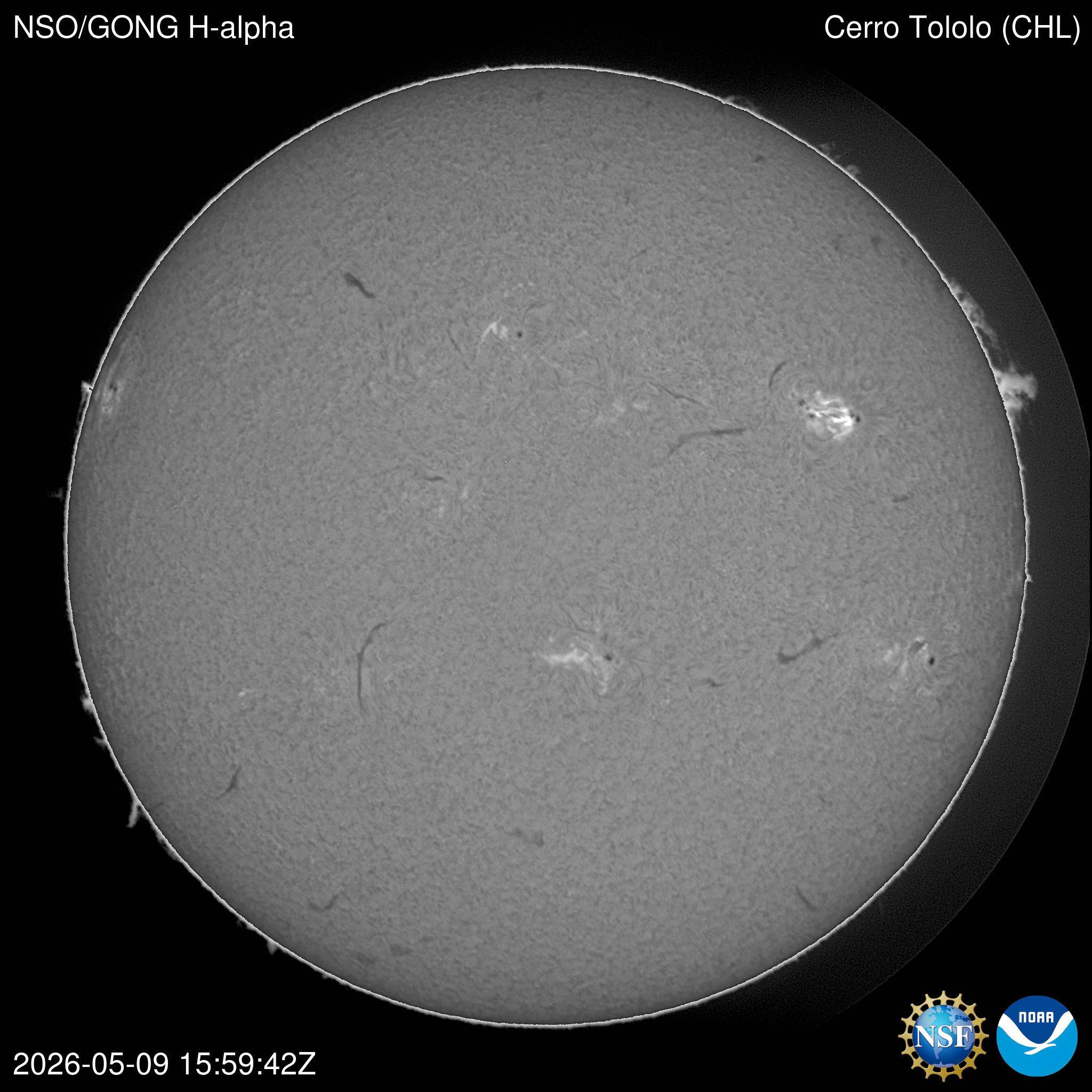
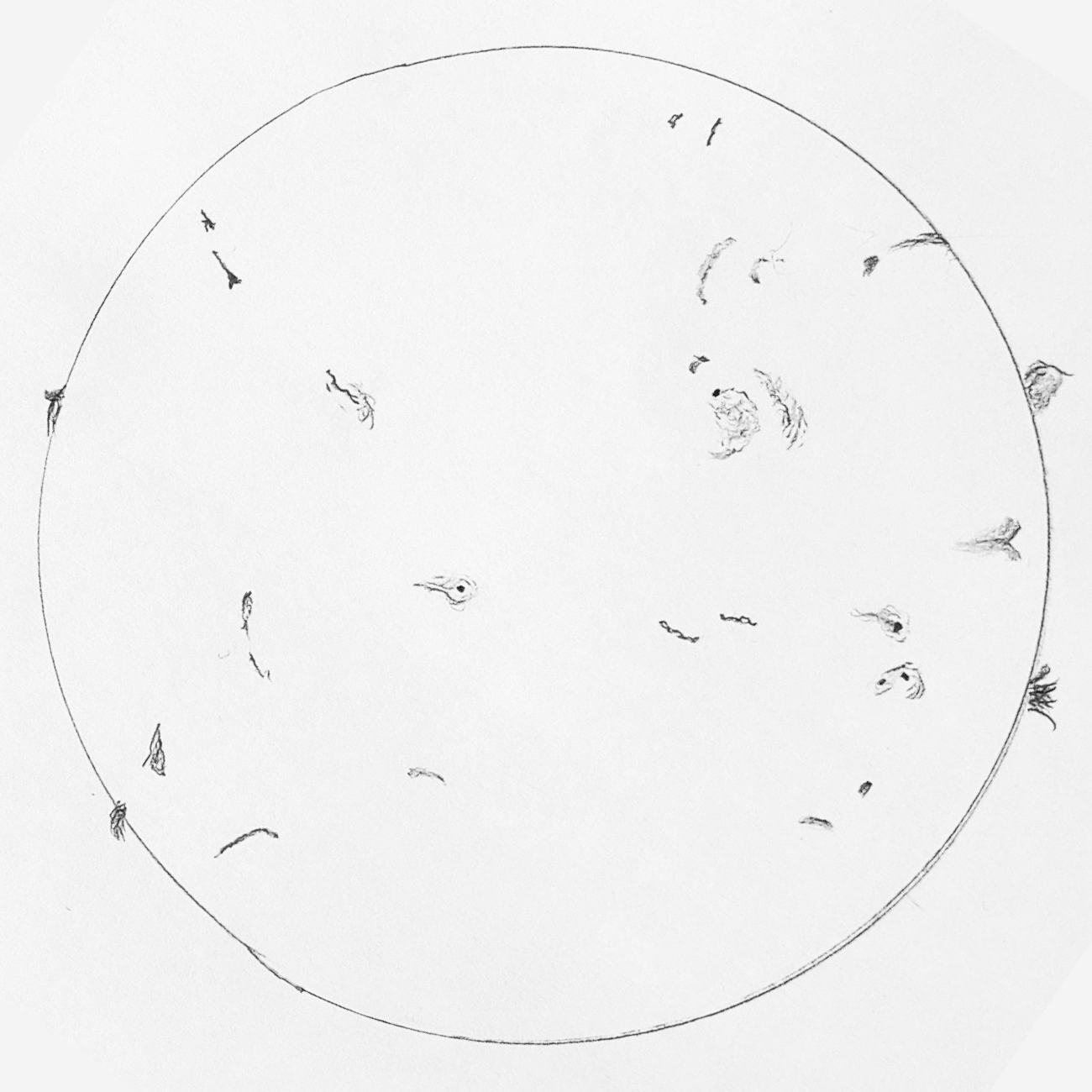
Neil Morley, 09 May 2026, 15:20-15:40 UT
Below left: a sketch drawn at the eyepiece of the Coronado PST. I used a Baader Mk. IV Hyperion 8-24 mm zoom eyepiece between 24 mm and 16 mm settings, providing magnification of 17x to 25x and a view of the full solar disk. Below right: the corresponding GONG image.
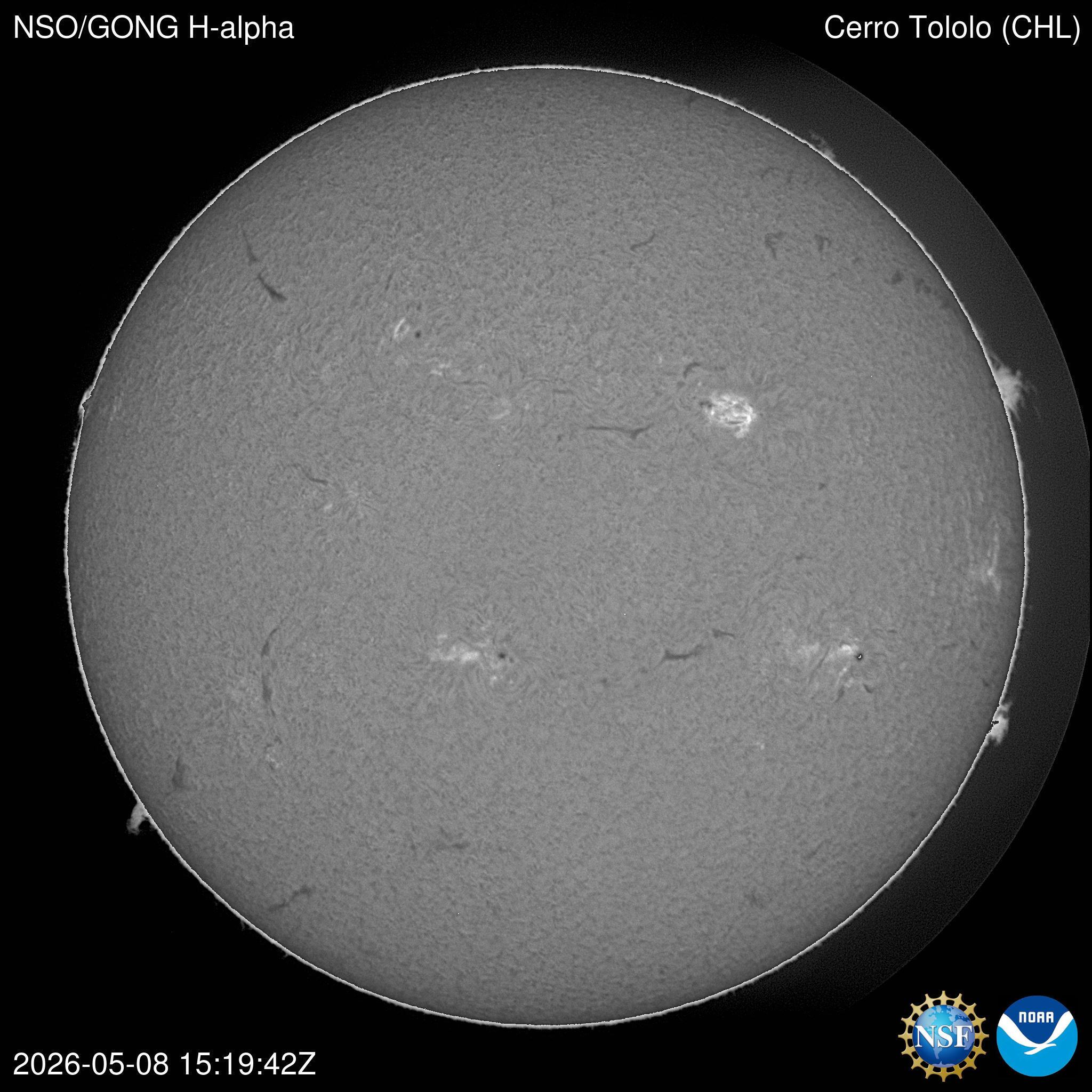
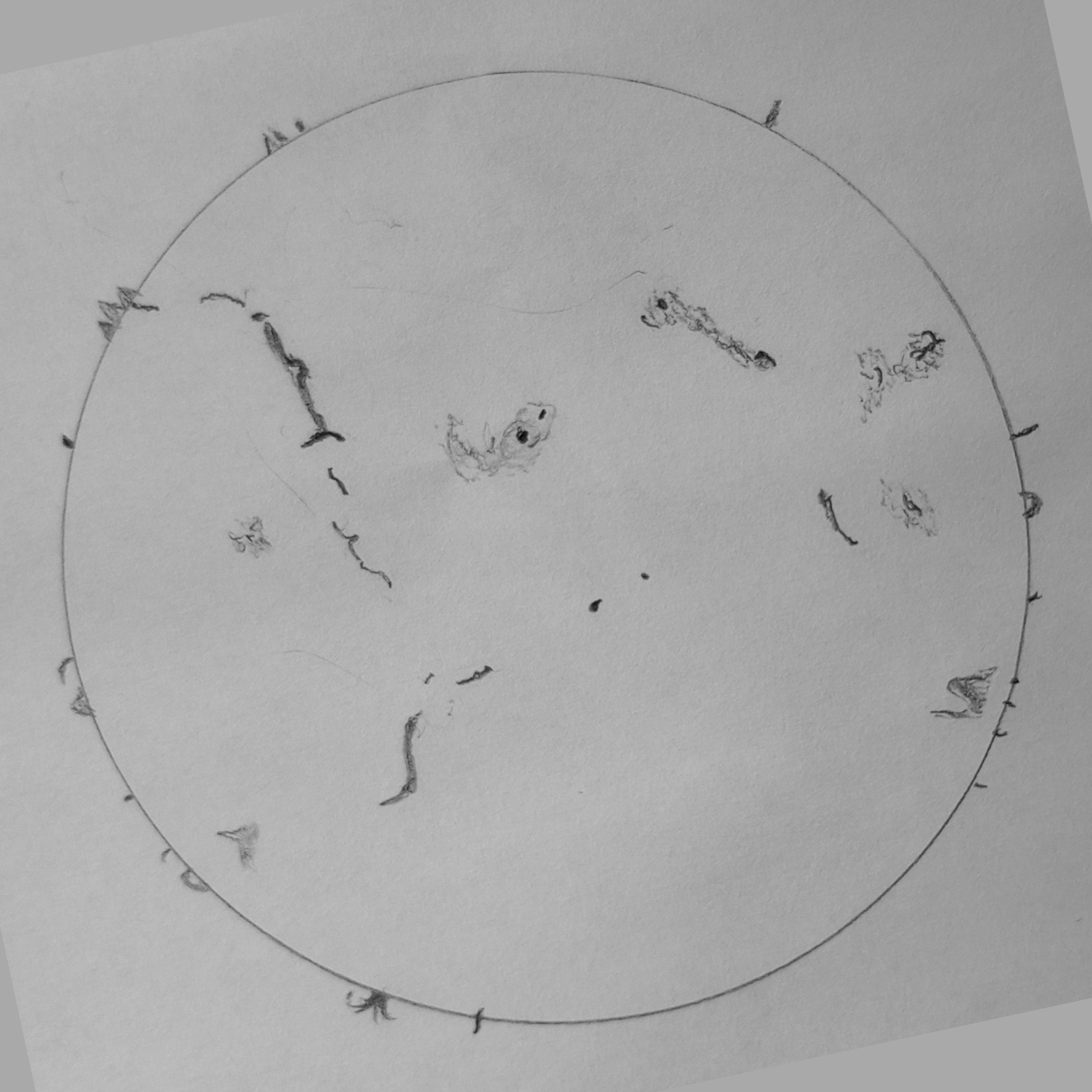
Neil Morley, 08 May 2026, 14:50-15:05 UT
Below left: a sketch drawn at the eyepiece of the Coronado PST using a Baader Mk. IV Hyperion 8-24 mm zoom eyepiece between 24 mm and 20 mm settings, providing magnifications in the range 17-20x and a view of the full solar disk. Below right: the corresponding GONG image.
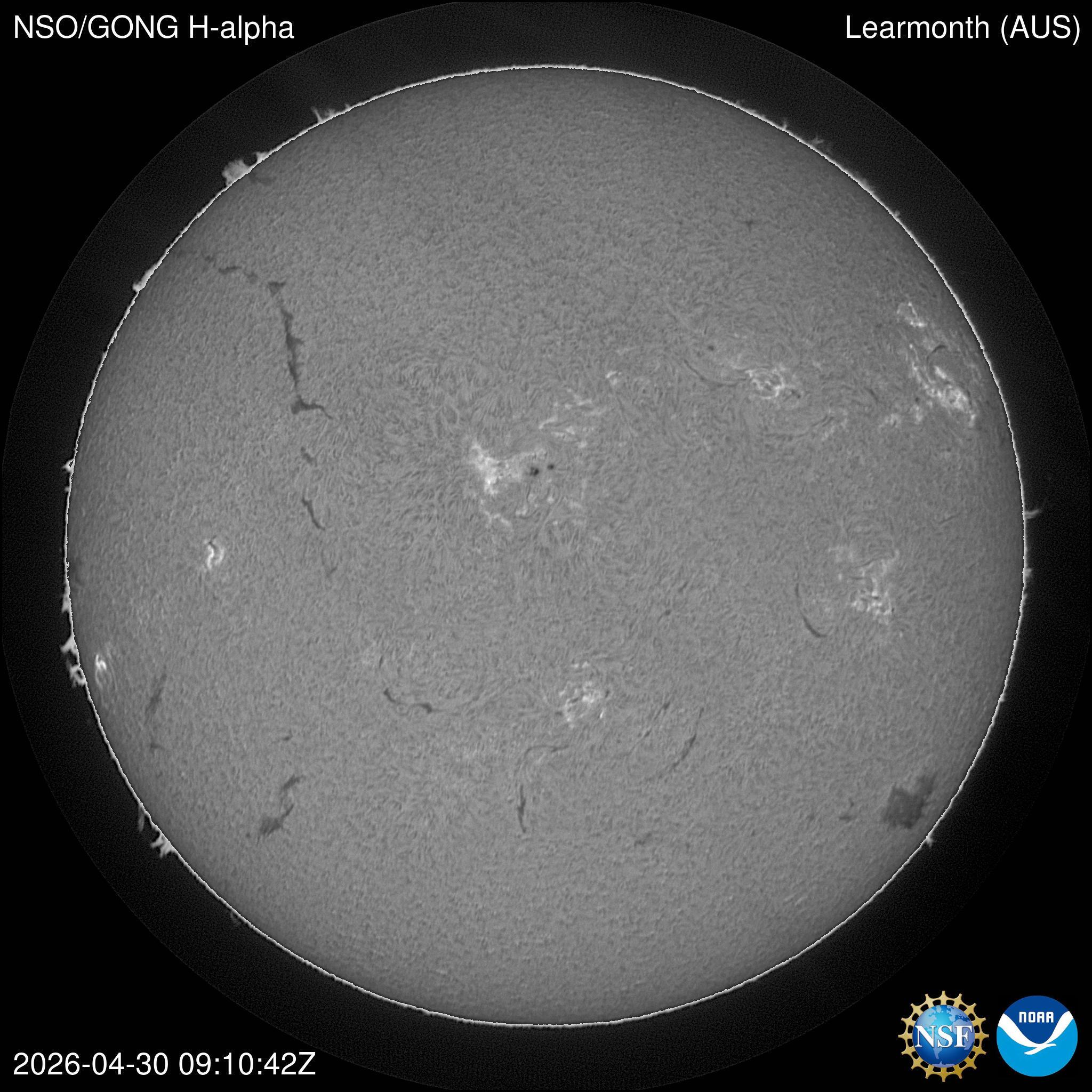
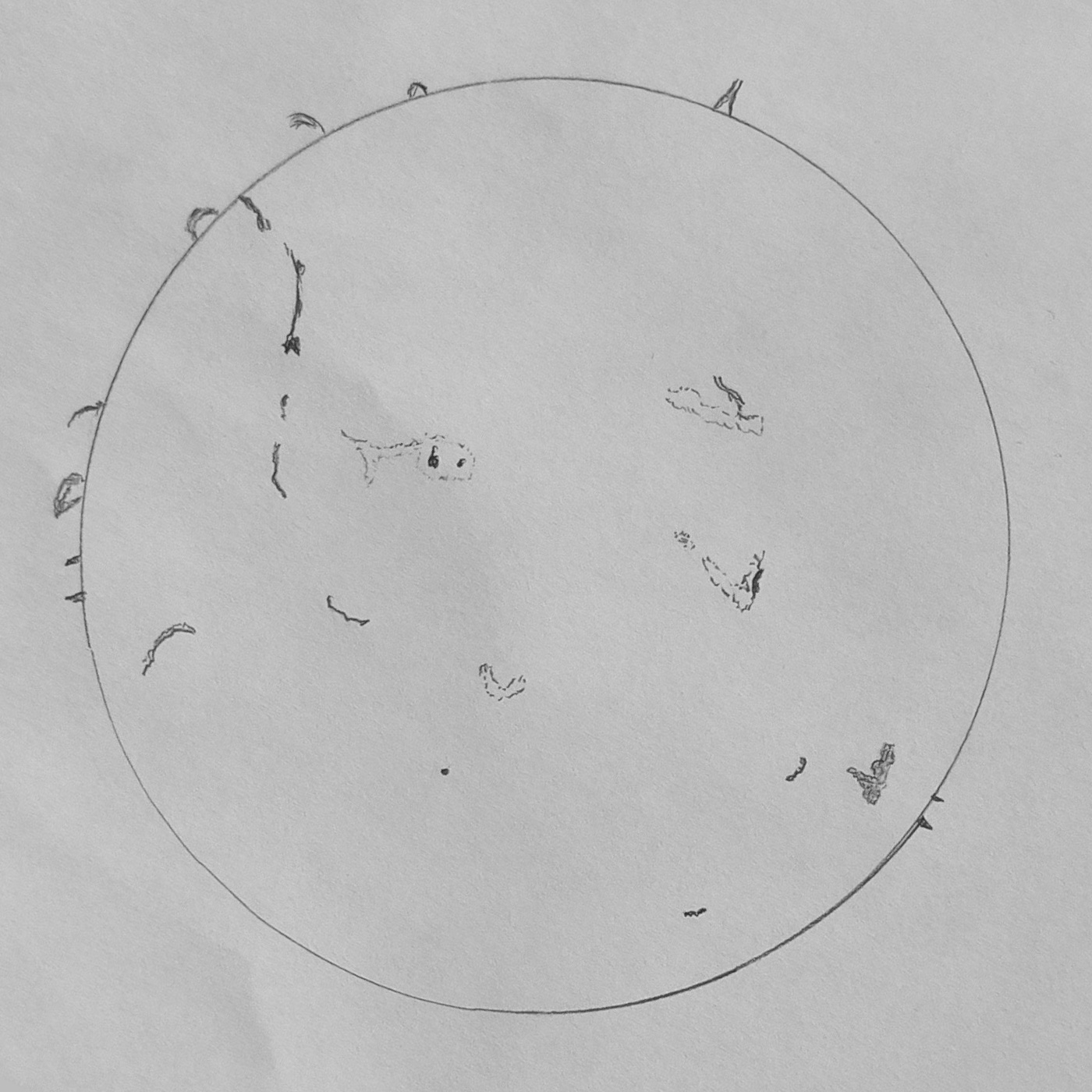
Neil Morley, 30 April 2026, 15:40-15:55 UT
Below left: a sketch drawn at the eyepiece of the Coronado PST using a Baader Hyperion 8-24 mm zoom eyepiece at the 12 mm and 8 mm settings, providing magnifications of 33x and 50x. Below right: the corresponding GONG image.
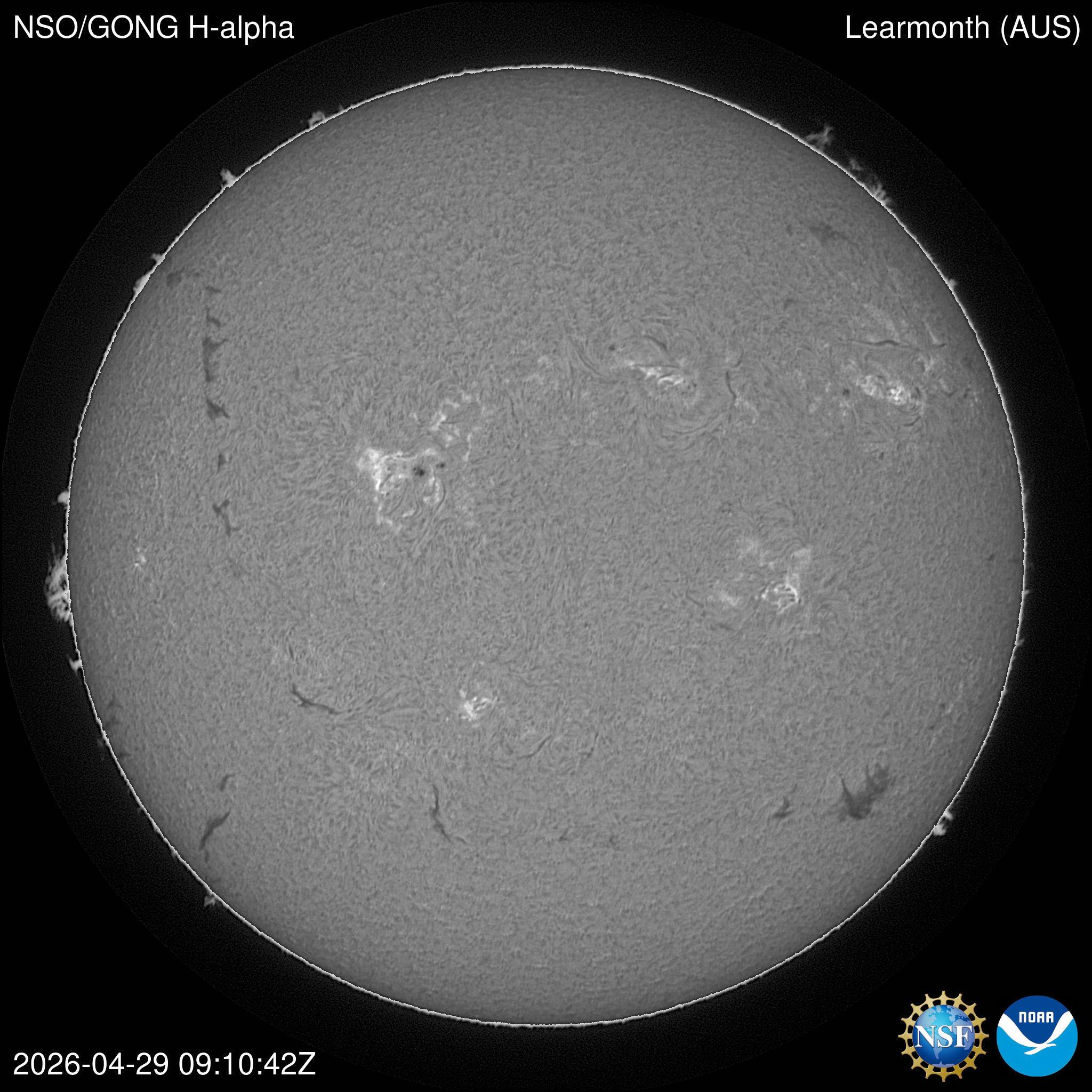
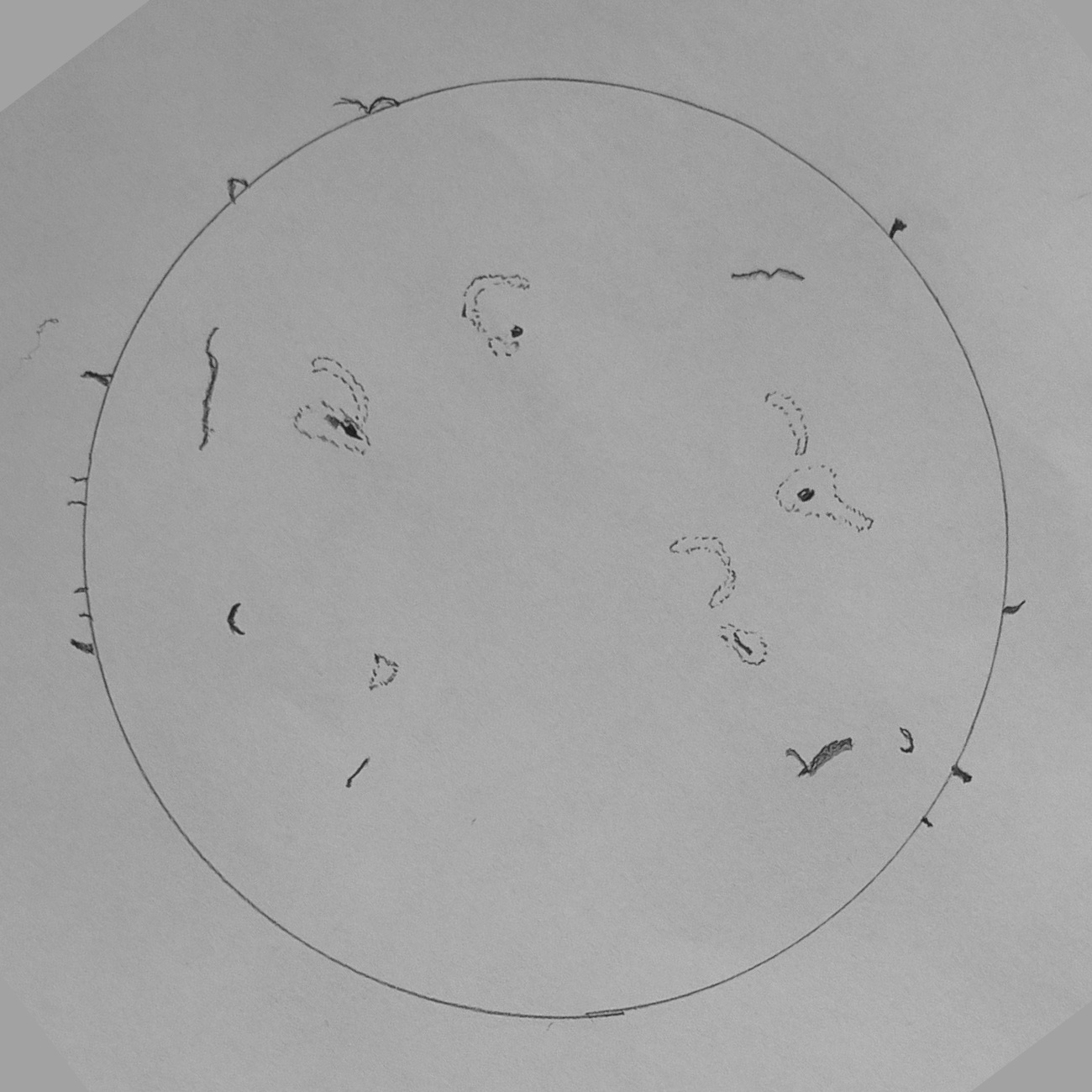
Neil Morley, 29 April 2026, 14:30-14:45 UT
Below left: a sketch drawn at the eyepiece of the LS35. I used a 20 mm Plössl eyepiece providing a magnification of 20x. Below right: the corresponding GONG image.
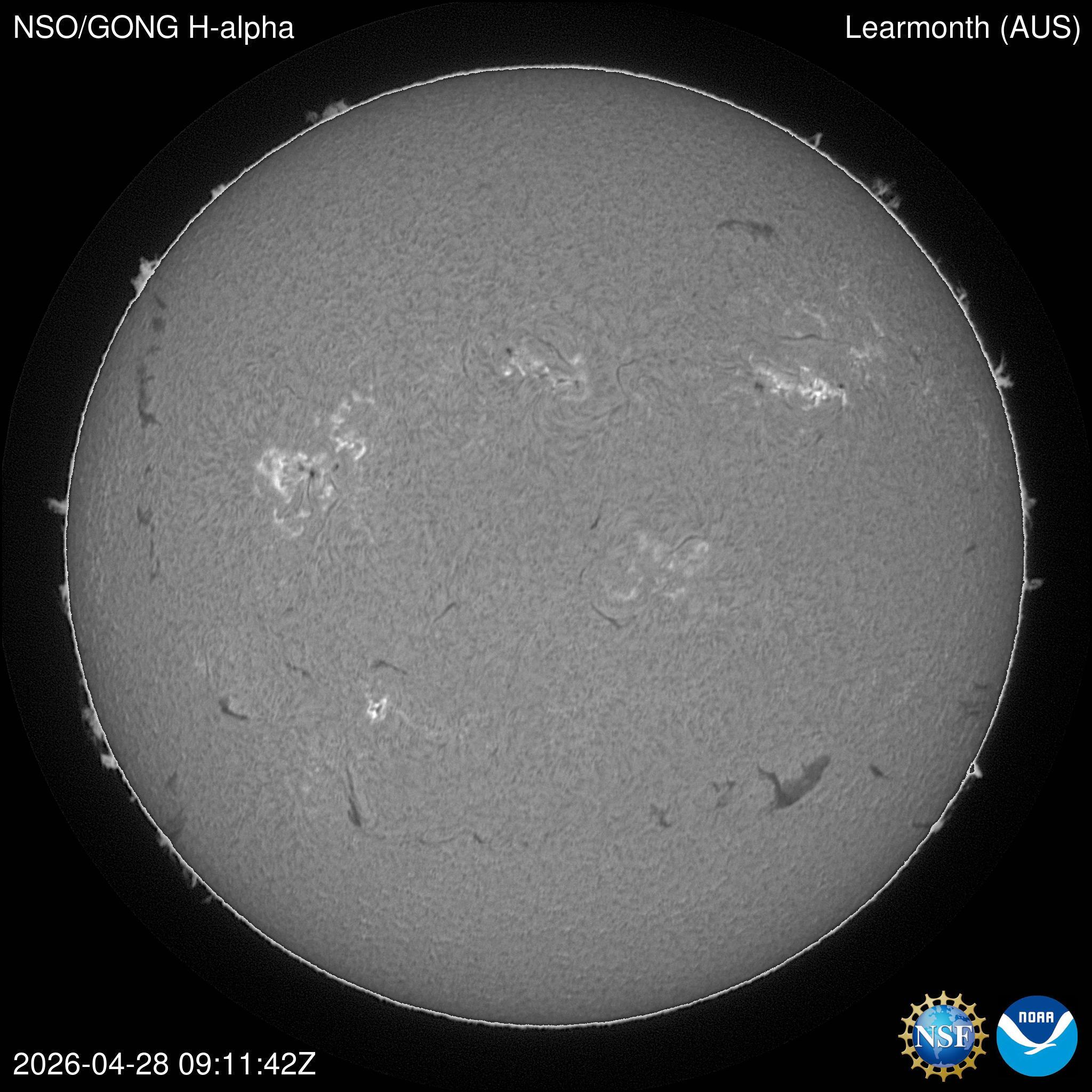
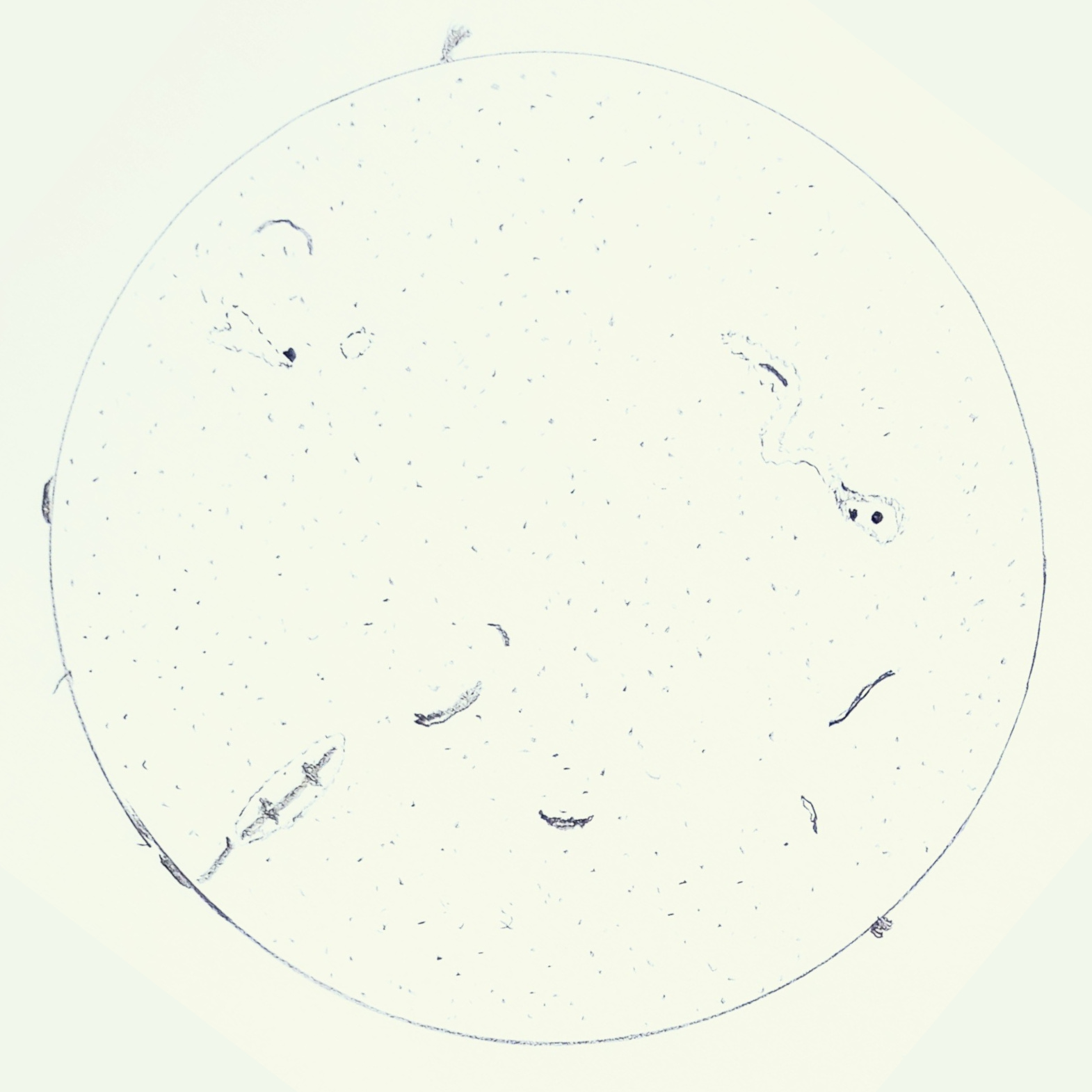
Neil Morley, 28 April 2026, 13:15-13:30 UT
Below left: is a sketch drawn at the eyepiece of the LS35 using a 20 mm Plössl eyepiece providing a magnification of 20x. Below right: the corresponding GONG image.
Neil Morley, 22 April 2026, 13:00-13:15 UT
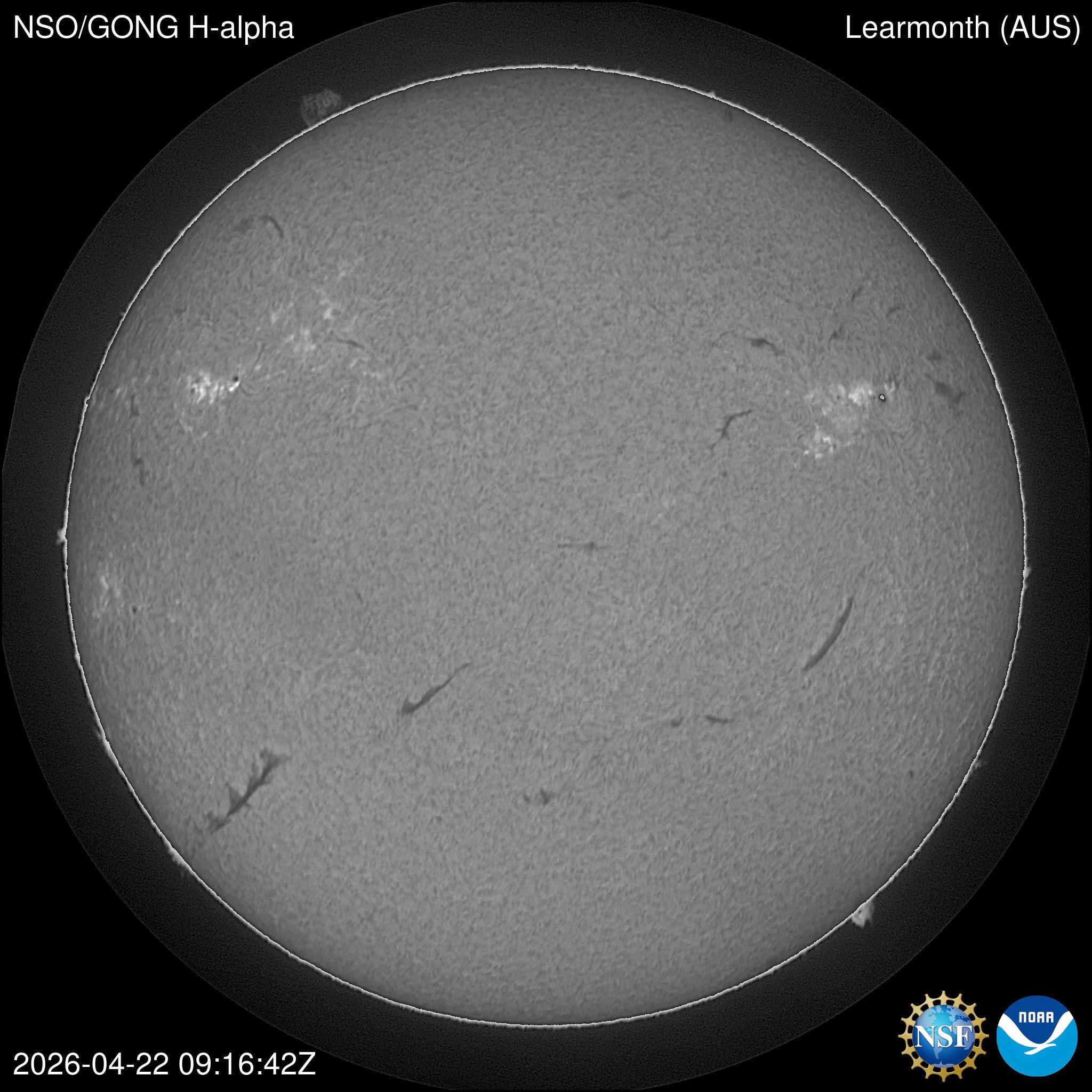
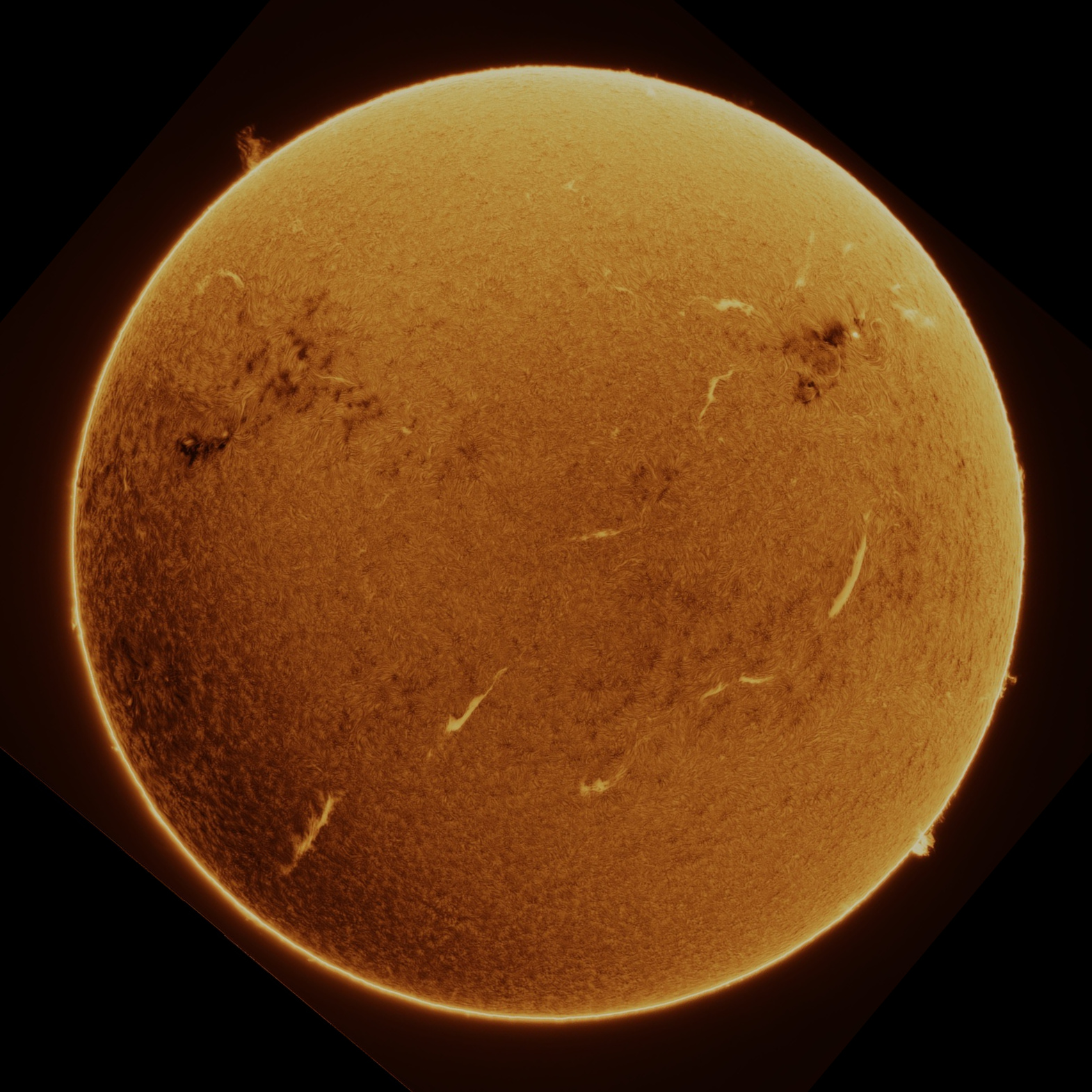
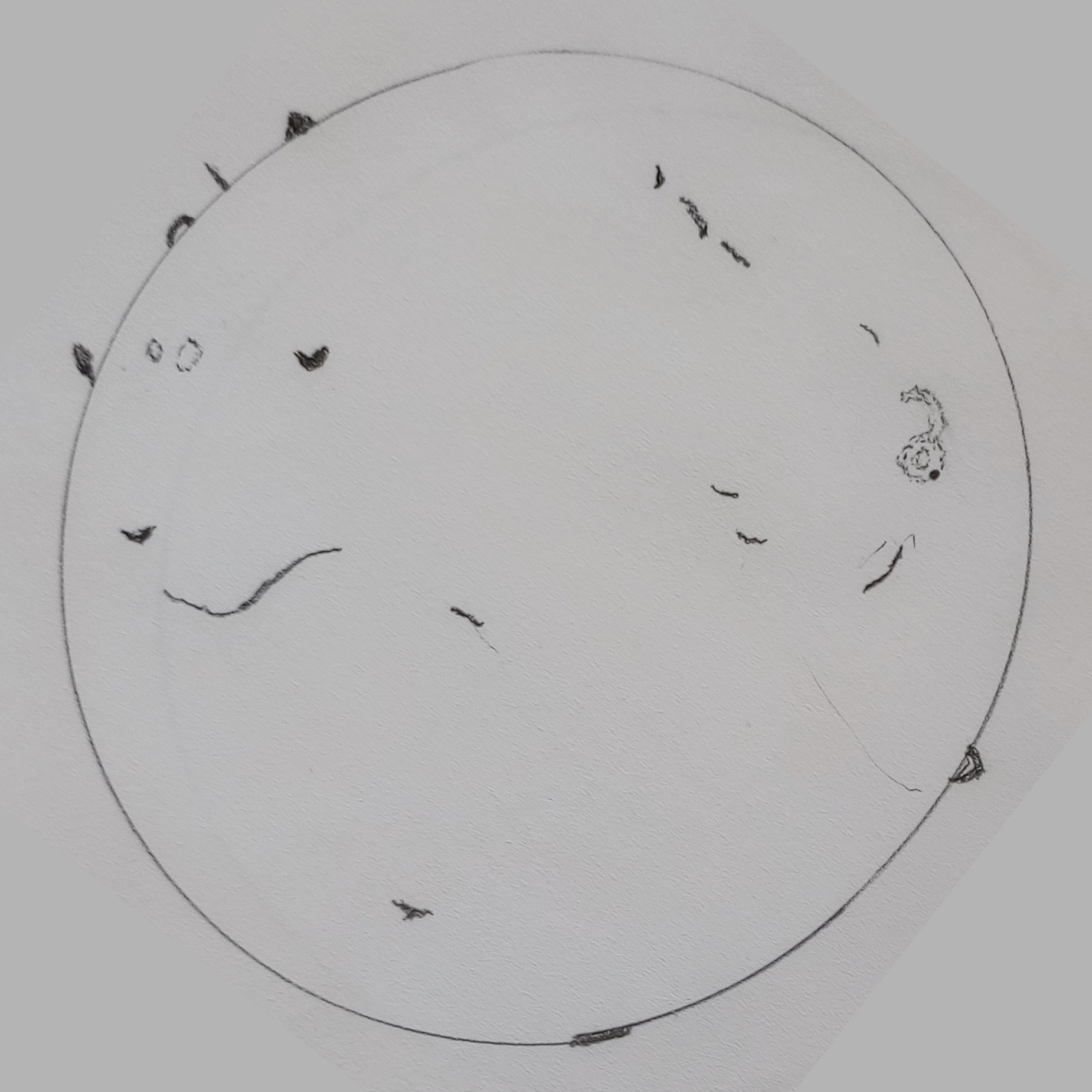
Three views of the solar disk on 22 April. Left: a sketch drawn at the eyepiece of the LS35 using a 20 mm Plössl eyepiece providing a magnification of 20x. Below centre: the corresponding GONG image. Below right: an image in Hα light by OASI member Steve McElvanney using a Skywatcher Heliostar 76 telescope and ASI 585 mono camera.
Neil Morley, 07 April 2026
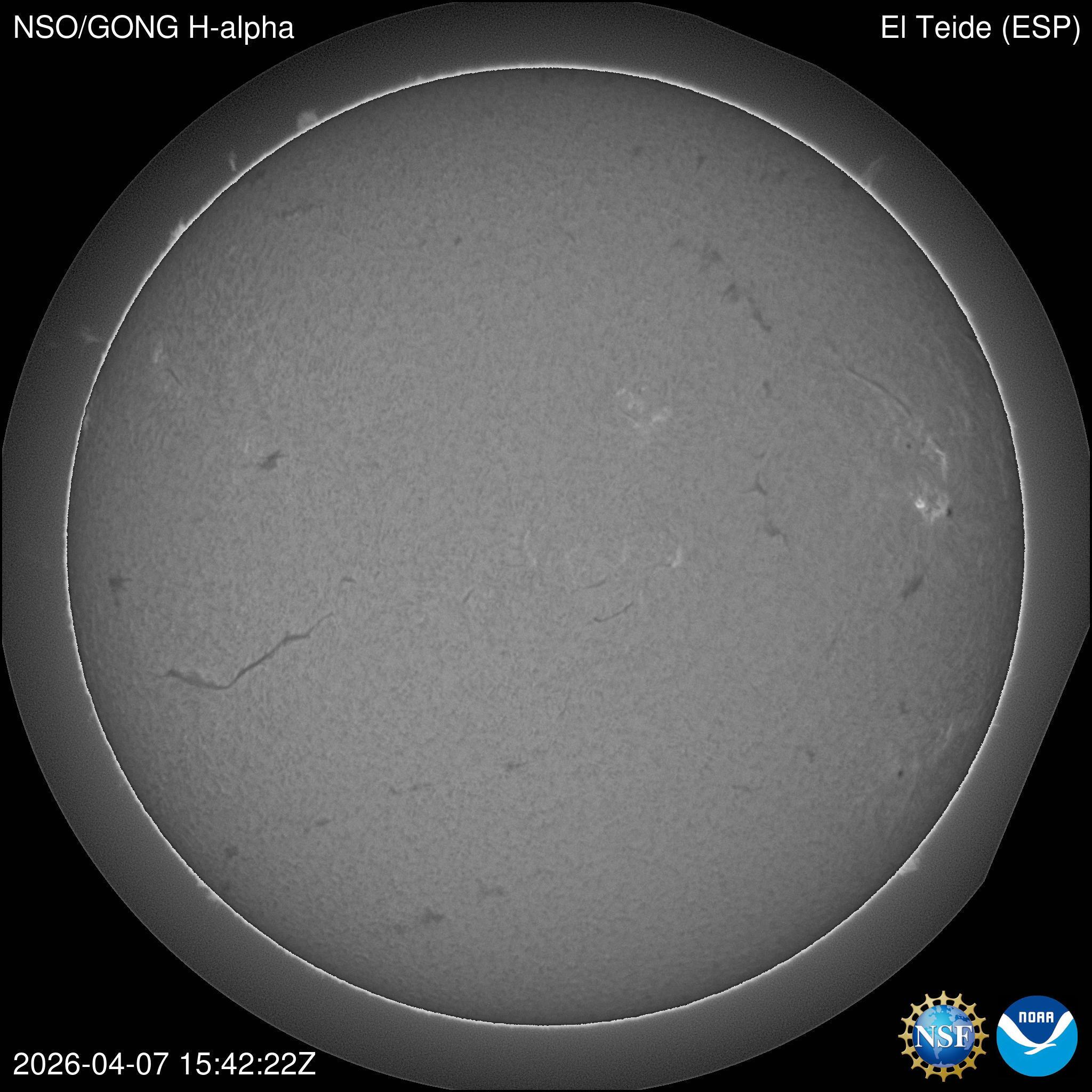
Below left: a sketch drawn at the eyepiece of the LS35 using 25 and 20 mm Plössl eyepieces providing magnifications of 16x and 20x. Below right: the corresponding GONG image.
Neil Morley, 17 March 2026, 10:55-11:05 UT
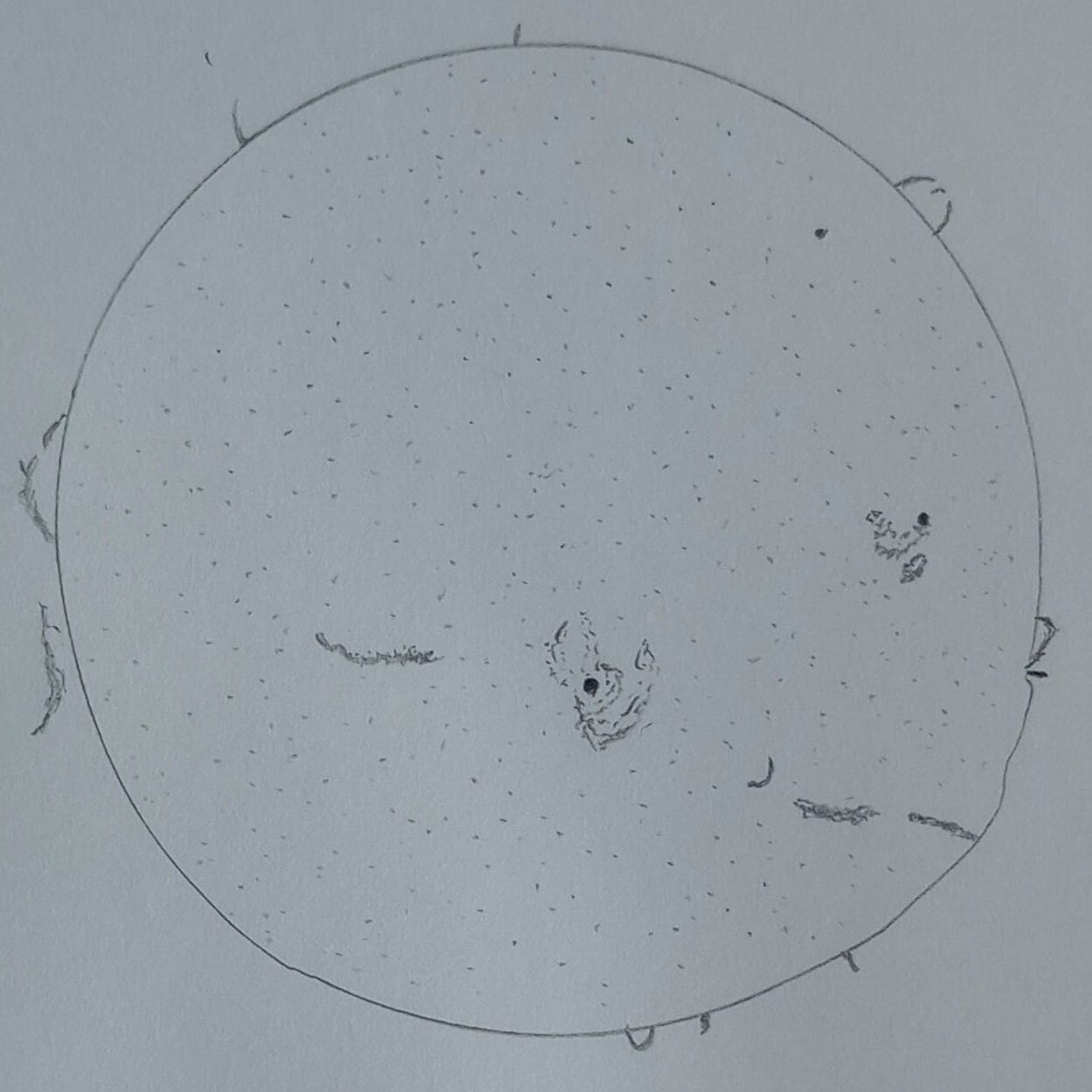
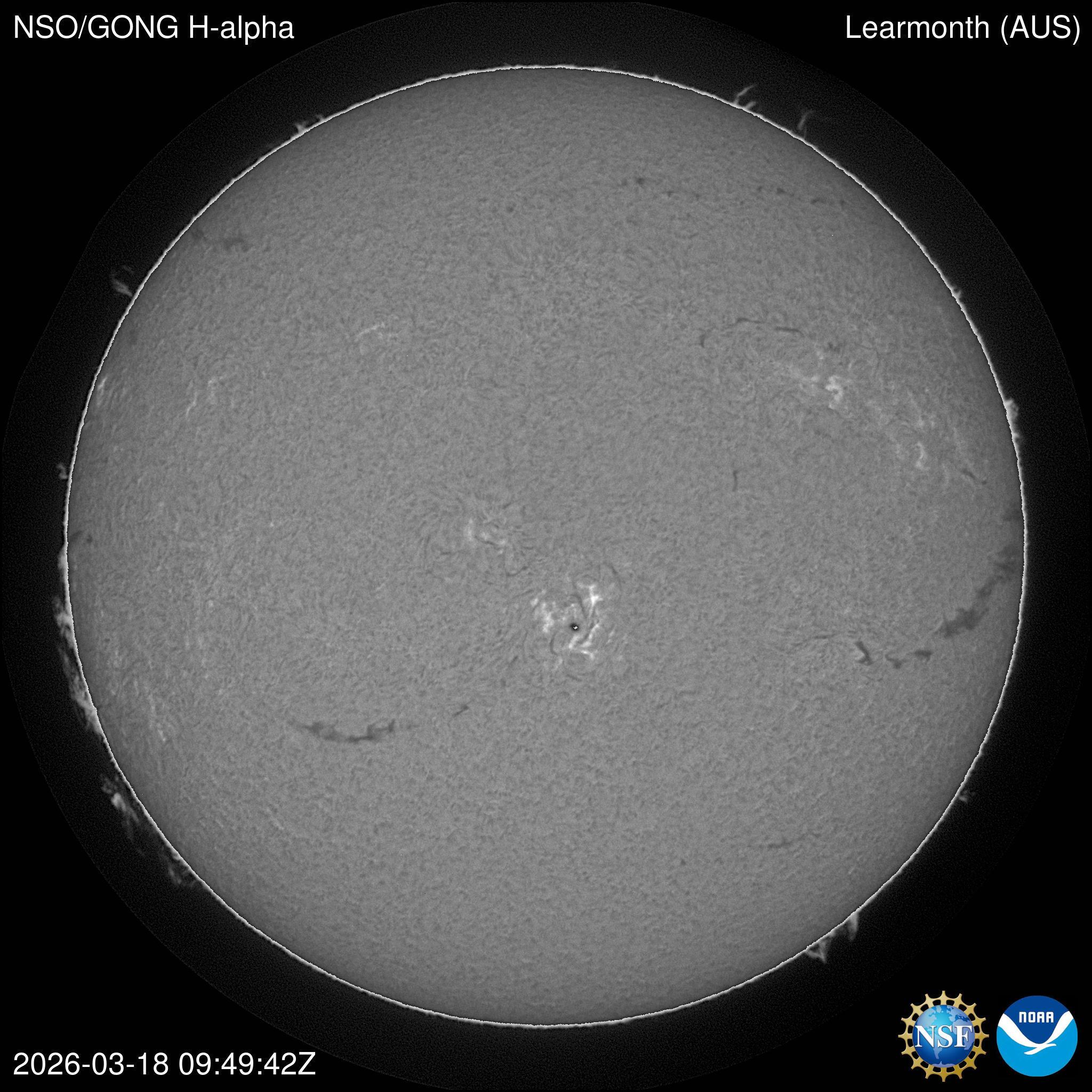
Below left: a sketch drawn at the eyepiece of the LS35 using a 20 mm Plössl eyepiece providing a magnification of 20x. Below right: the corresponding GONG image.
Neil Morley, 06 March 2026, 10:00-10:05 UT
I sketched the Sun 10:00-10:05 UT under a murky sky before clouds thickened and obscured the view. I used the Tasco with a Kendrick solar filter fitted over the dew cap. The eyepiece was a 25 mm Kellner providing a magnification of 28x. Image processed in GIMP 2.6.
Neil Morley, 05 March 2026, 15:00-15:30 UT
Two views of the solar disk in Hα light. Below left: my sketch of the Sun 15:00-15:30 UT using a Lunt LS35 with 20 mm Plössl eyepiece providing a magnification of 20x. Below right: image by OASI member Steve McElvanney using a Skywatcher Heliostar 76 telescope and ASI 585 mono camera.
Neil Morley, 03 December 2025, 11:50-11:55 UT
The solar disk sketched using the Tasco with a 25 mm Kellner eyepiece providing a magnification of 28x. An amazing amount of detail was visible!
Neil Morley, 11 July 2025, 16:40-16:50 UT
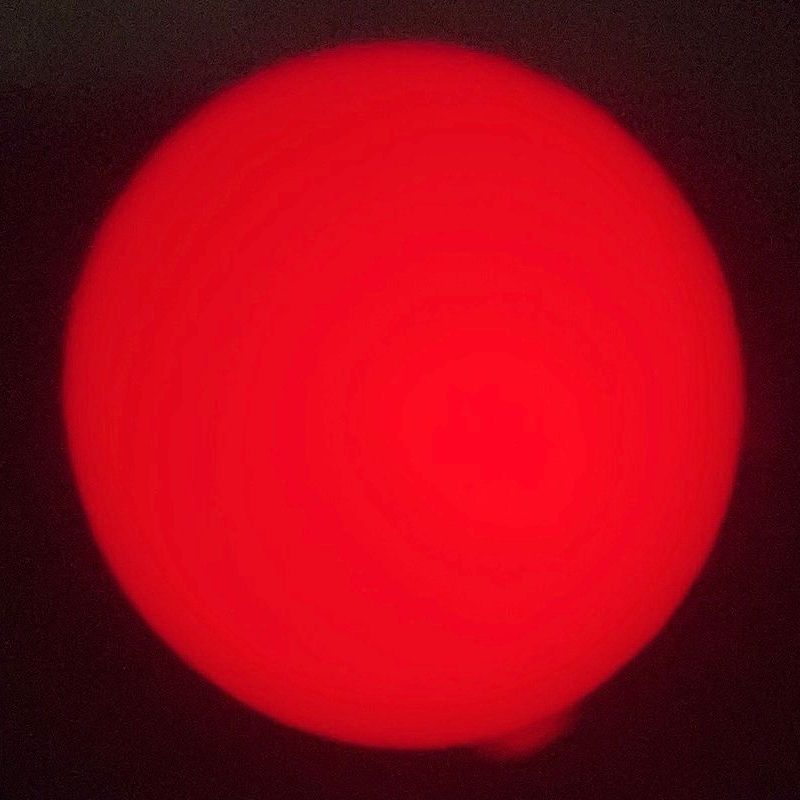
Below left: the solar disk sketched at the eyepiece of OASI's Coronada PST on an alt-az mount, using a Baader Mk. IV zoom eyepiece at 25 mm, providing x16 magnification. There are two impressive prominences at the 5 o'clock position. Below centre: an image taken at the eyepiece. Below right: an image taken by Andy Gibbs with a smartphone camera at the eyepiece of a Lunt LS60THa/B1200 on a Solar Quest mount.
Neil Morley, 13 May 2025, 14:20-14:30 UT
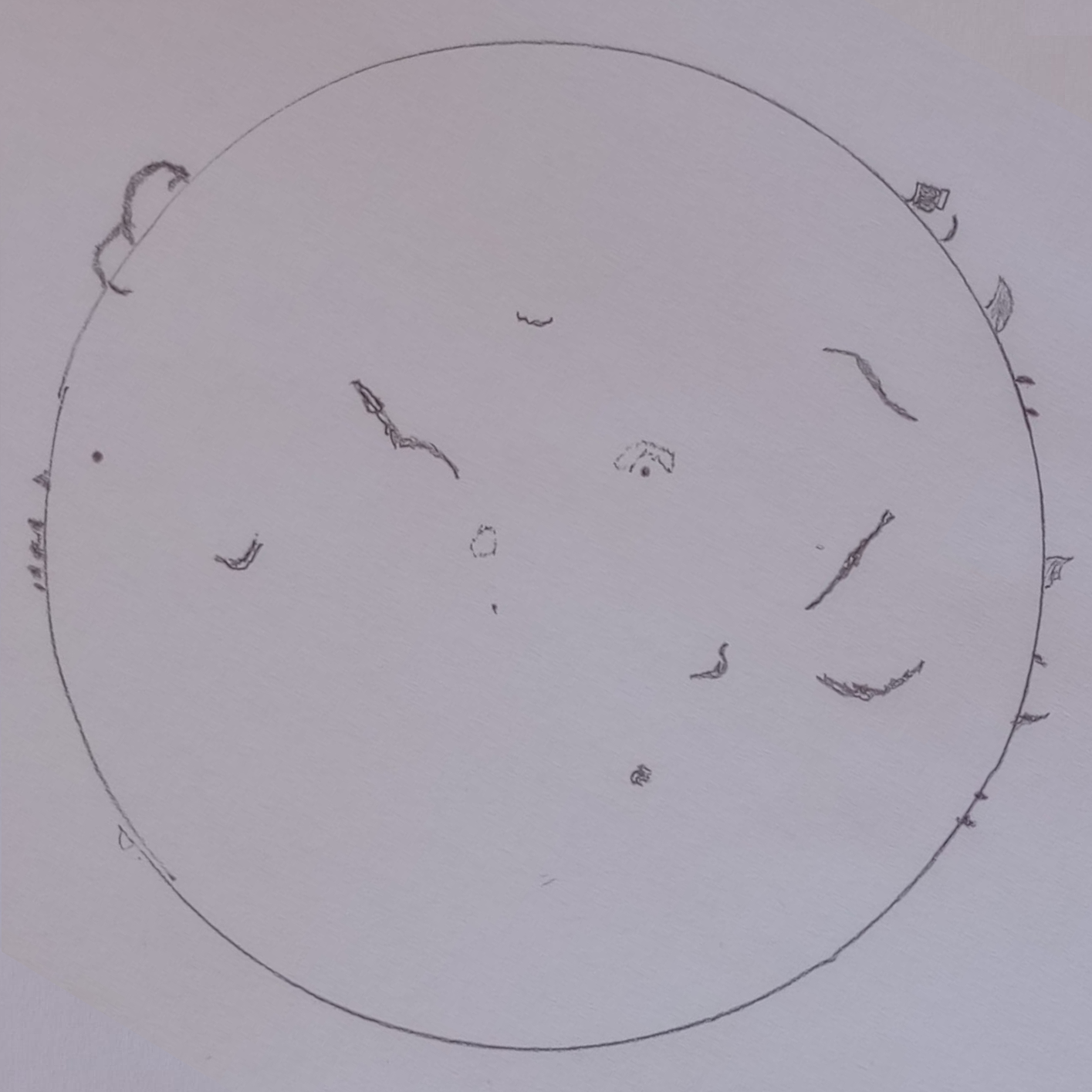
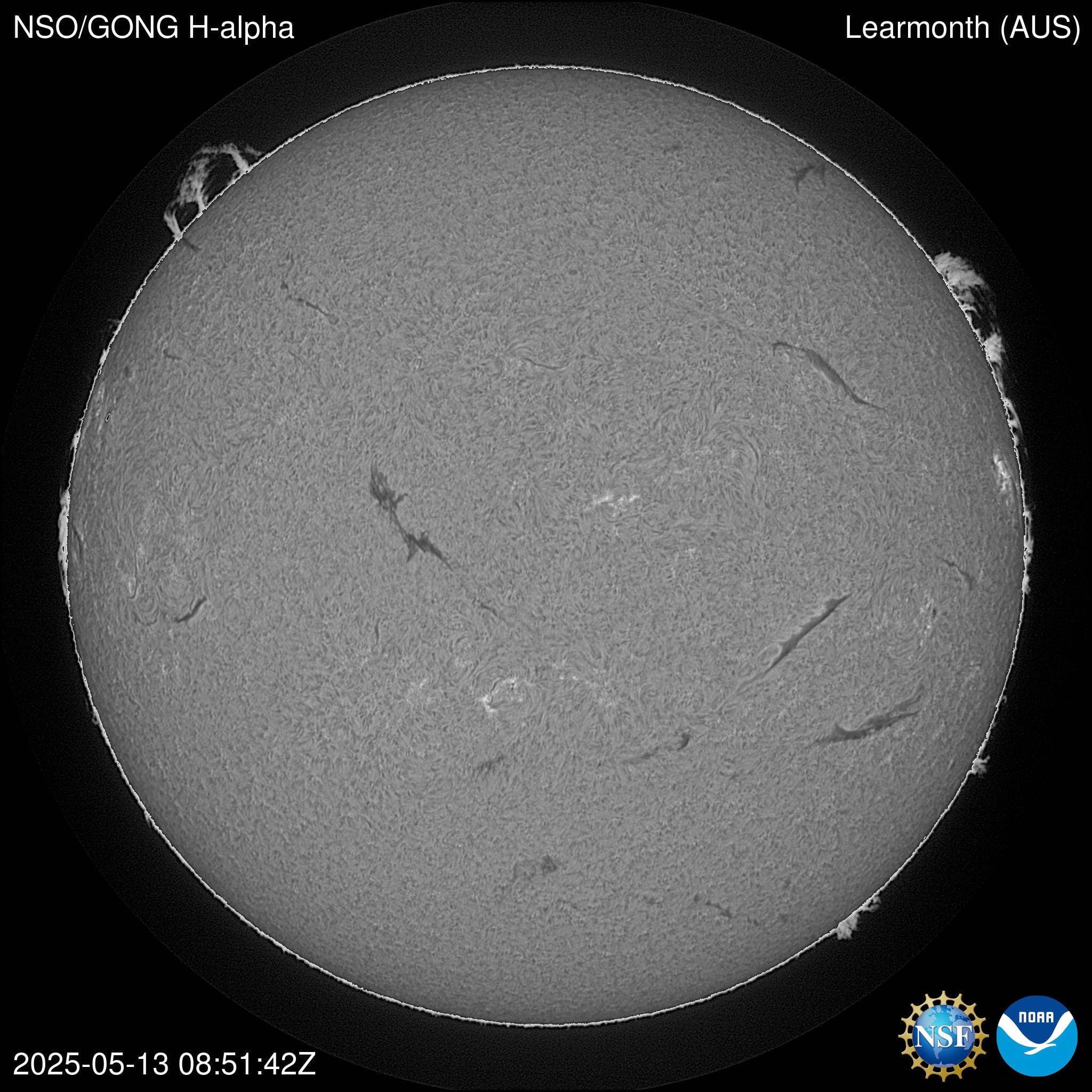
Below left: a sketch made at the eyepiece of the LS35 using a 20 mm Plössl eyepiece providing a magnification of 20x. The LS35 was mounted on an iOptron Cube Pro driven mount. The sketch has been L-R inverted and rotated to provide "true" orientation. There is an interesting prominence at the 10.00 o'clock position. Below right: the corresponding GONG image.
Neil Morley, 20 March 2025, 14:05-14:20 UT
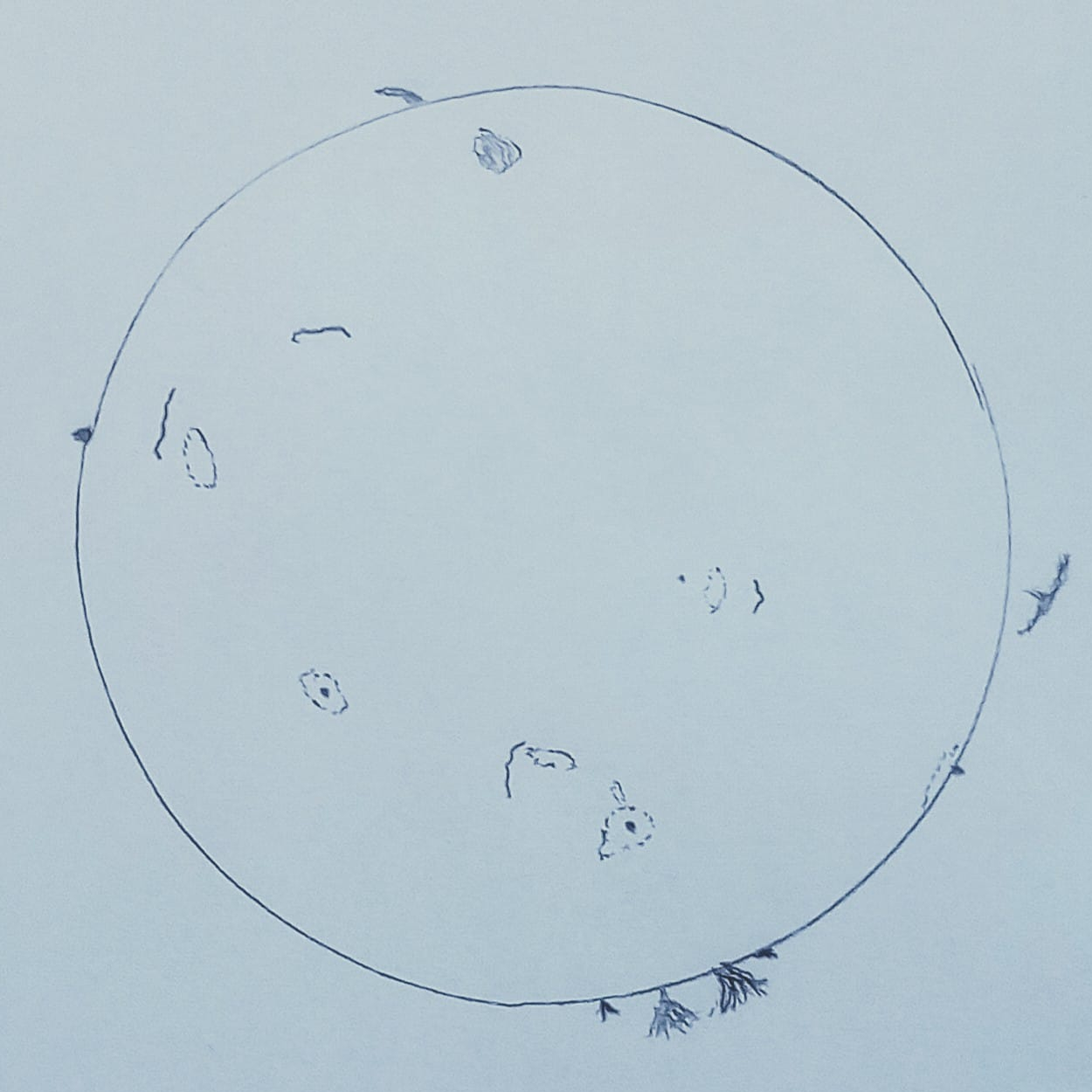
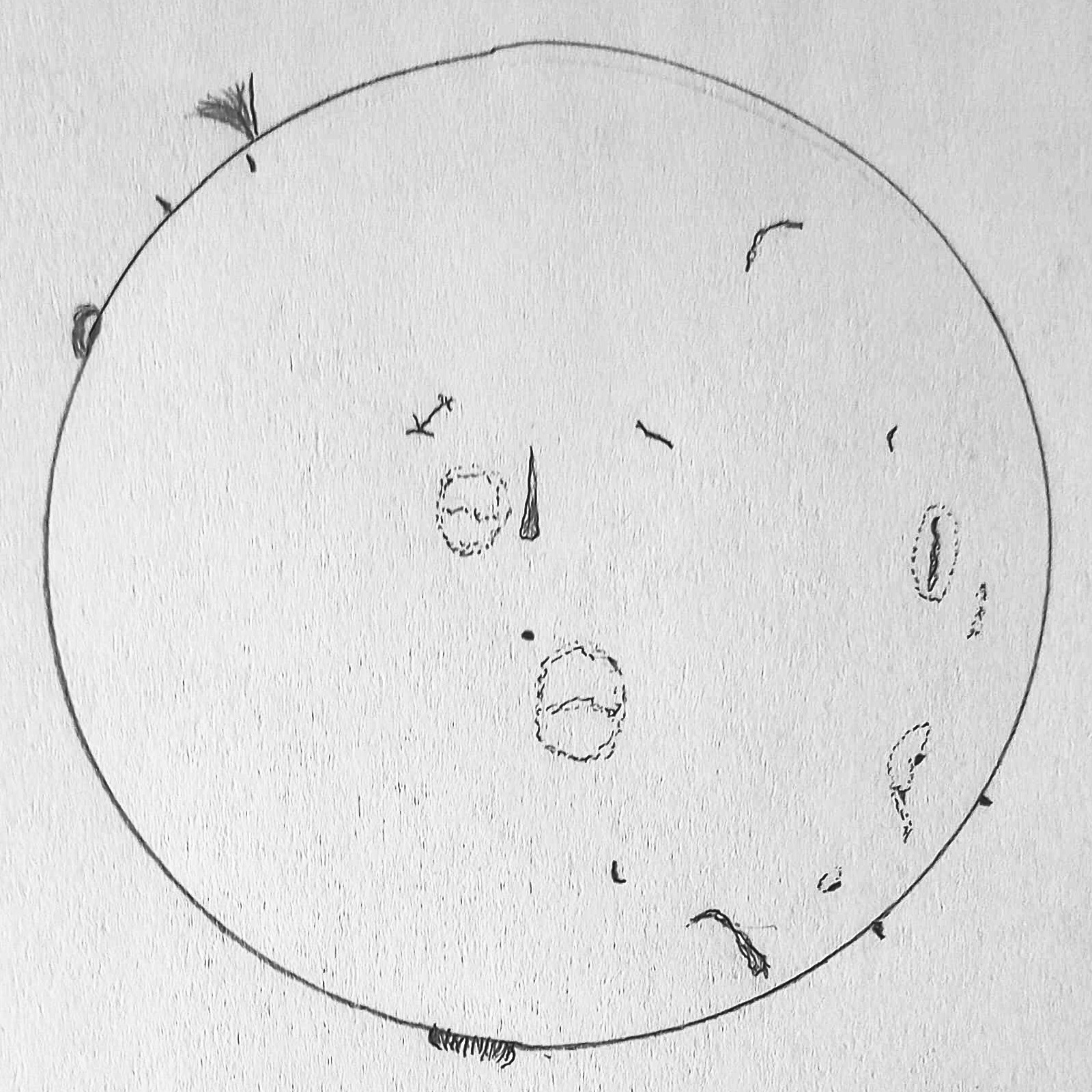
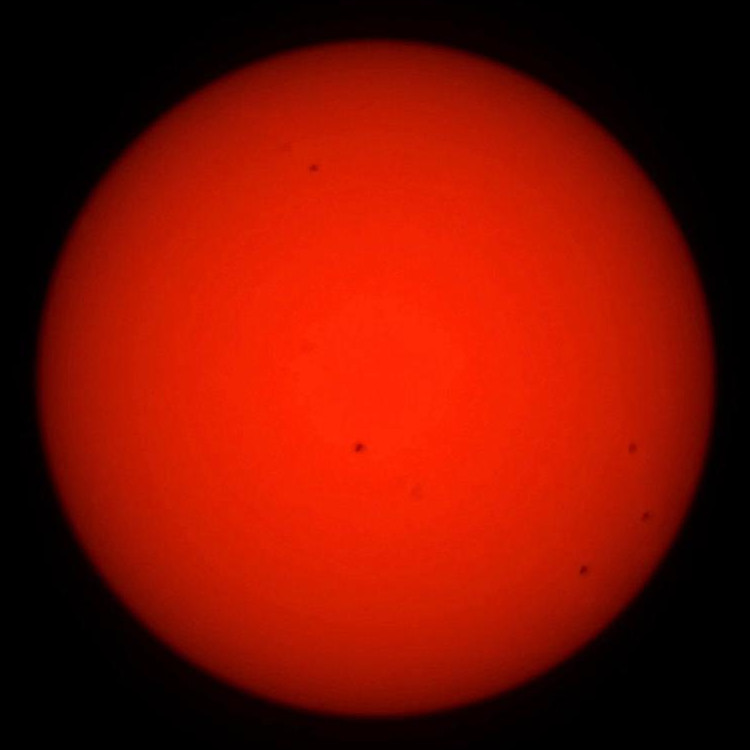
Below left: a sketch made at the eyepiece of the LS35 using a 20 mm Plössl eyepiece providing 20x magnification. The sketch has been L-R inverted to give "true" orientation. The Sun appeared orange-red in colour with the surface having a texture similar to that of orange peel. The sunspot near the centre of the disk appeared black. Solid lines represent filaments, which appeared brownish; dotted lines represent active regions, which appeared sandy-coloured. Interesting prominences including a fan and a magnetic loop were visible on the upper-left limb. Below right: an image captured on the same day by OASI Chairman Andy Gibbs, using a Seestar S50 in "solar" mode.
Neil Morley, 06 February 2025, 11:10-11:20 UT
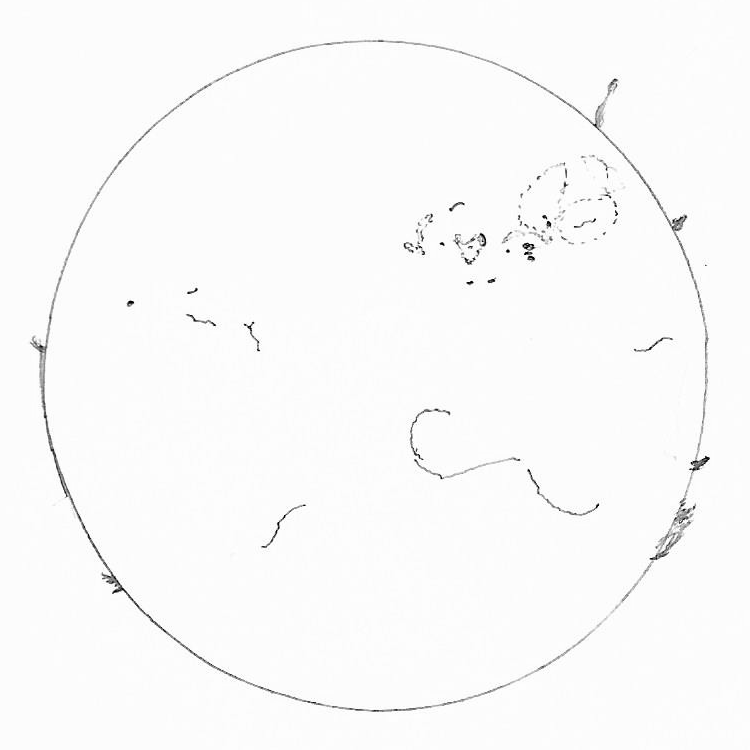
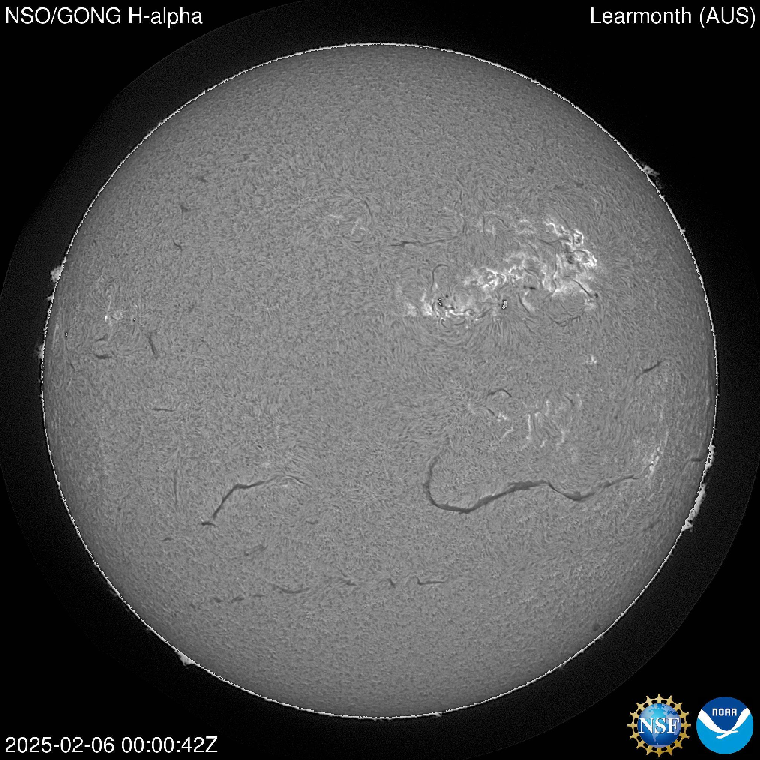
Below left: a sketch made at the eyepiece of the LS35. Below right: the corresponding GONG image.
Neil Morley, 10 May 2024, 16:15-16:45 UT
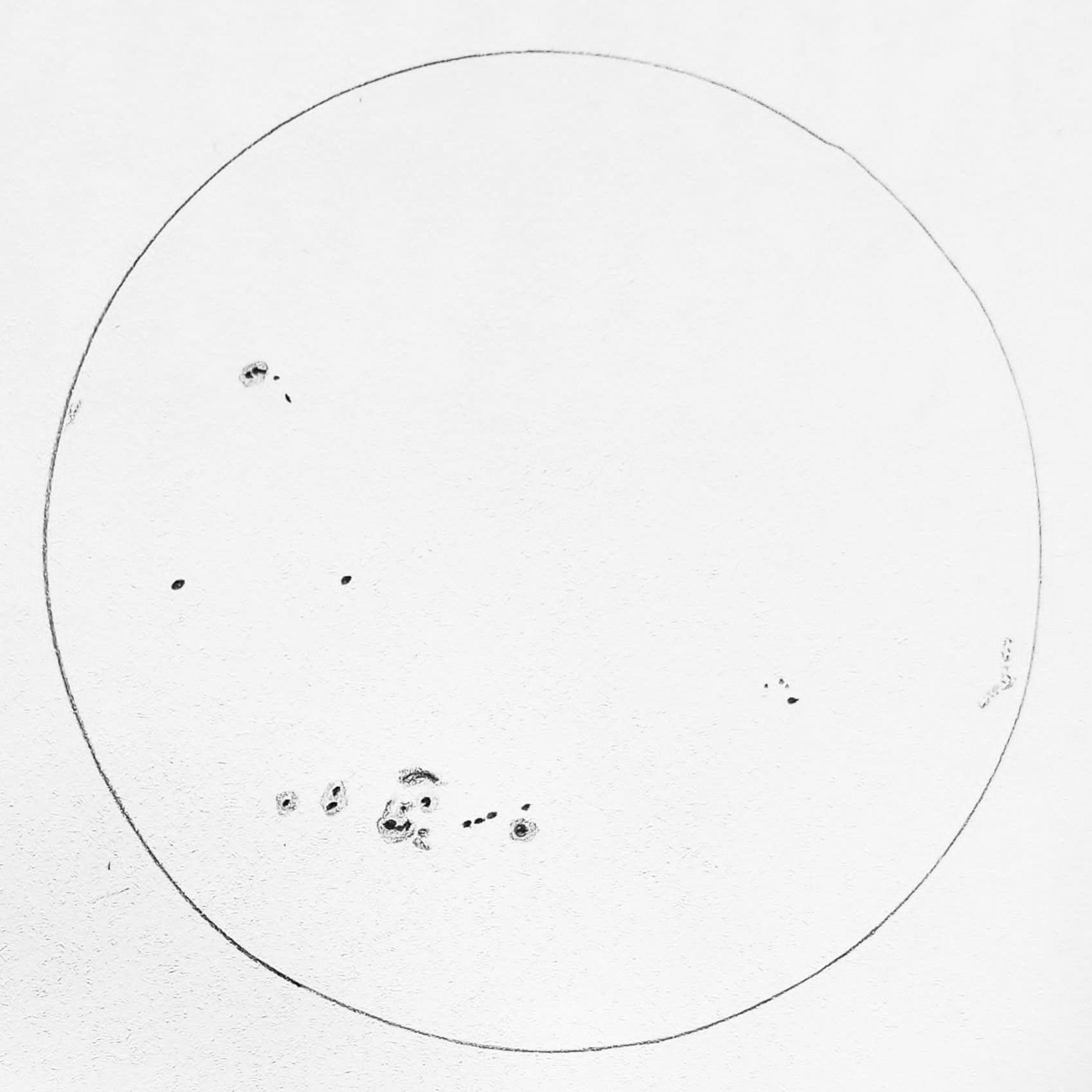
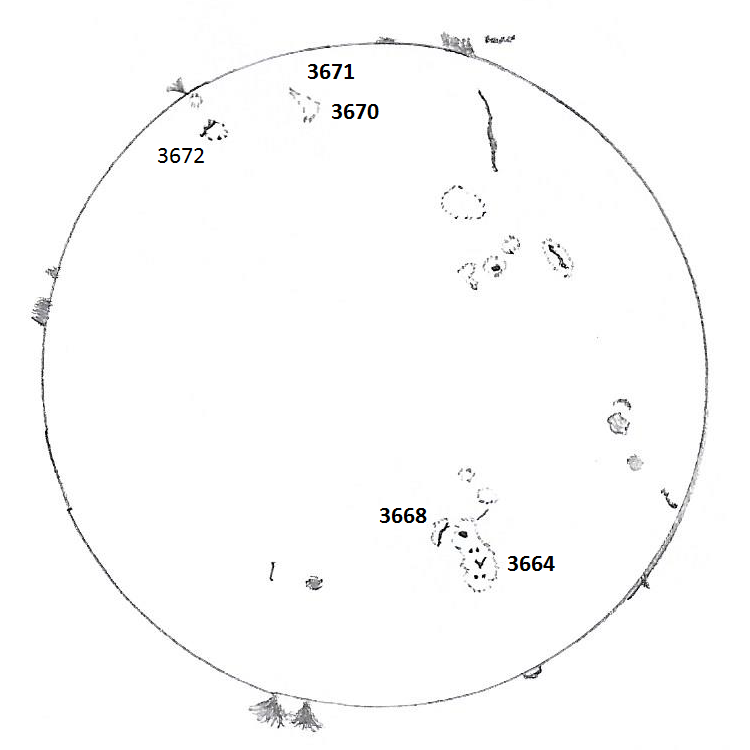
Below left is a pencil sketch made using the PST with a 20 mm Plössl eyepiece providing a magnification of 20x. After some trial and error to achieve optimum focus, I found cupping my hands around the eyepiece significantly improved contrast. Wearing a wide brimmed hat reduced the glare from the Sun, and an adjustable observing chair provided a comfortable posture! My technique was detune the PST to the white light range to sketch the sunspots: this helped to anchor the sketch. I then returned the PST to the Hα range to sketch active regions, prominences, and filaments.
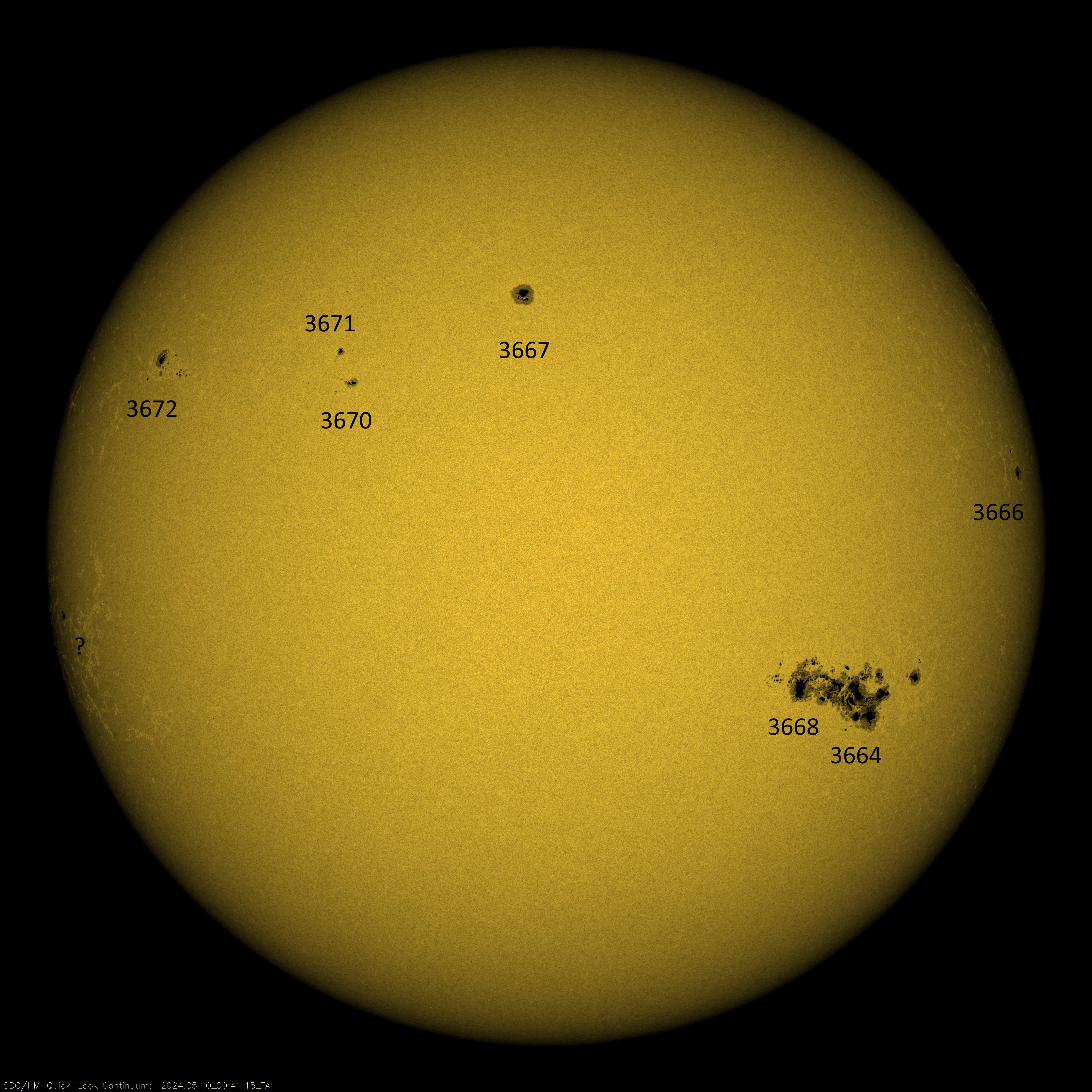
The colossal sunspot group AR13664 (labelled below in shortened form as 3664) triggered an intense aurora on 10 May.
For comparison purposes, below right is an image taken on the same day by the Helioseismic and Magnetic Imager (HMI) aboard the Solar Dynamics Observatory (SDO) satellite.
Neil Morley, 06 December 2023, 11:45-11:50 UT
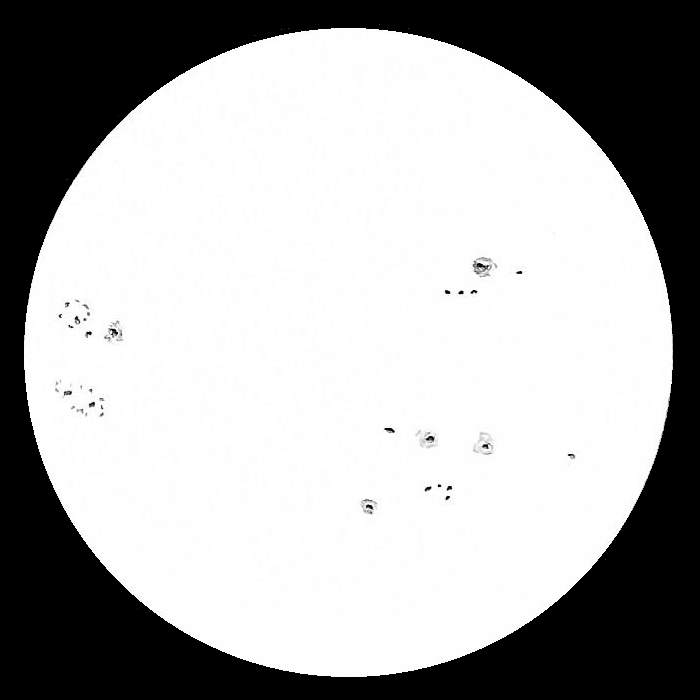
A sketch of the Sun in white light using the Celestron C4R with a Star 25 mm Plössl eyepiece providing a magnification of 40x.
Neil Morley, 08 December 2023, 10:55-11:00 UT
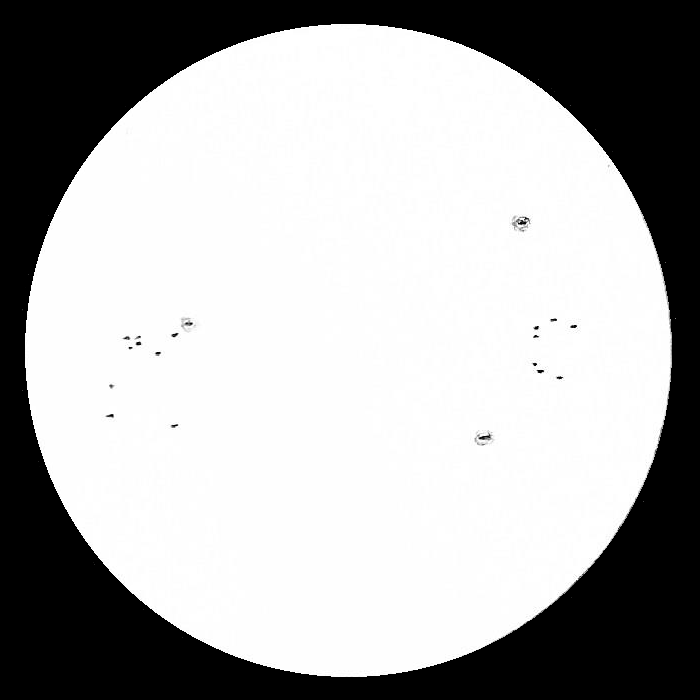
A sketch of the Sun in white light using the Celestron C4R with a Star 25 mm Plössl eyepiece providing a magnification of 40x.
Neil Morley, 17 August 2023, 15:00-15:20 UT
Illustration of the main steps involved in sketching the Sun using the PST. Below left: orignal pencil sketch. Below centre: scanned version of the sketch after colour added. Below right: final version with marbling added, to give the most realistic representation of the view through the eyepiece. The image features prominances, filaments and active regions.
I used a 20 mm Kellner eyepiece providing a magnification of 20x.
Neil Morley, 26 June 2023, 08:55-9:00 UT
The solar disk sketched using the PST with a Meade 26 mm Super Plössl eyepiece providing a magnification of 15.4x. The image features prominances, filaments and active regions.
Neil Morley, 04 June 2023, 12:30-12:35 UT
The solar disk sketched using the PST with a Meade 26 mm Super Plössl eyepiece providing a magnification of 15.4x. The scanning process lost some detail but retained key features including prominances, plages, filaments and active regions. Clearly a lot was happening on the solar disk!
Equipment and Techniques
Equipment
Lunt LS35 (see below).
Coronado SolarMax II (see below).
Coronado PST (see below).
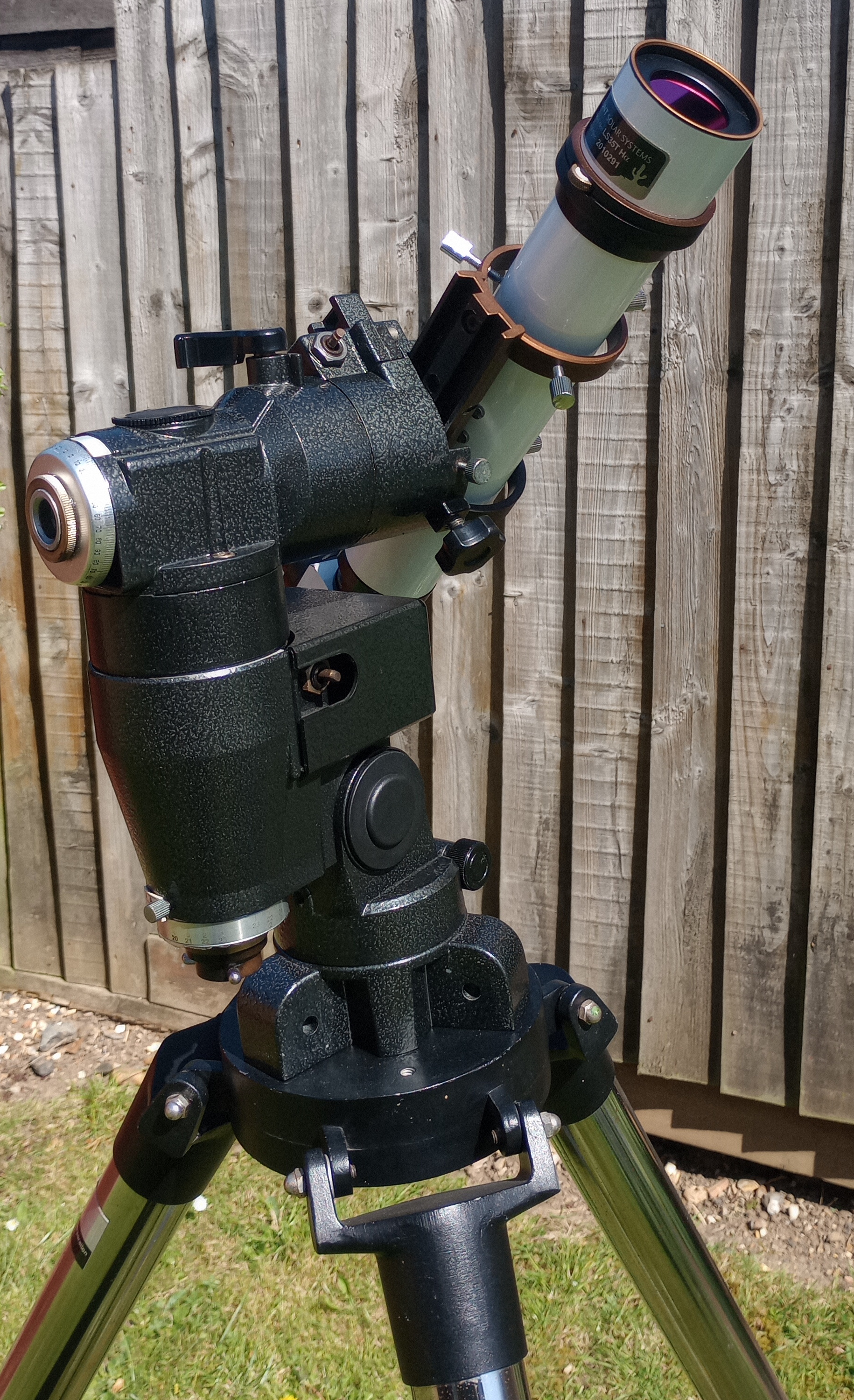
My Lunt LS35 Hα instrument. The telescope features a front-mounted etalon that is tuned by mechanically tilting it via a small thumbscrew. I use a B400, the stock solar diagonal supplied with the instrument. It contains a 4 mm blocking filter and a helical focuser built into the eyepiece barrel. It is adequate for visual observations and does not change the magnification of the eyepiece used. The Lunt is mounted on a manually driven Helios/Skywatcher EQ5 head, in turn mounted on a Meade field tripod. The EQ5 has been converted to alt-az mode by orienting the polar axis vertically. This makes for a light, portable setup (and is a useful technique for larger refractors too).
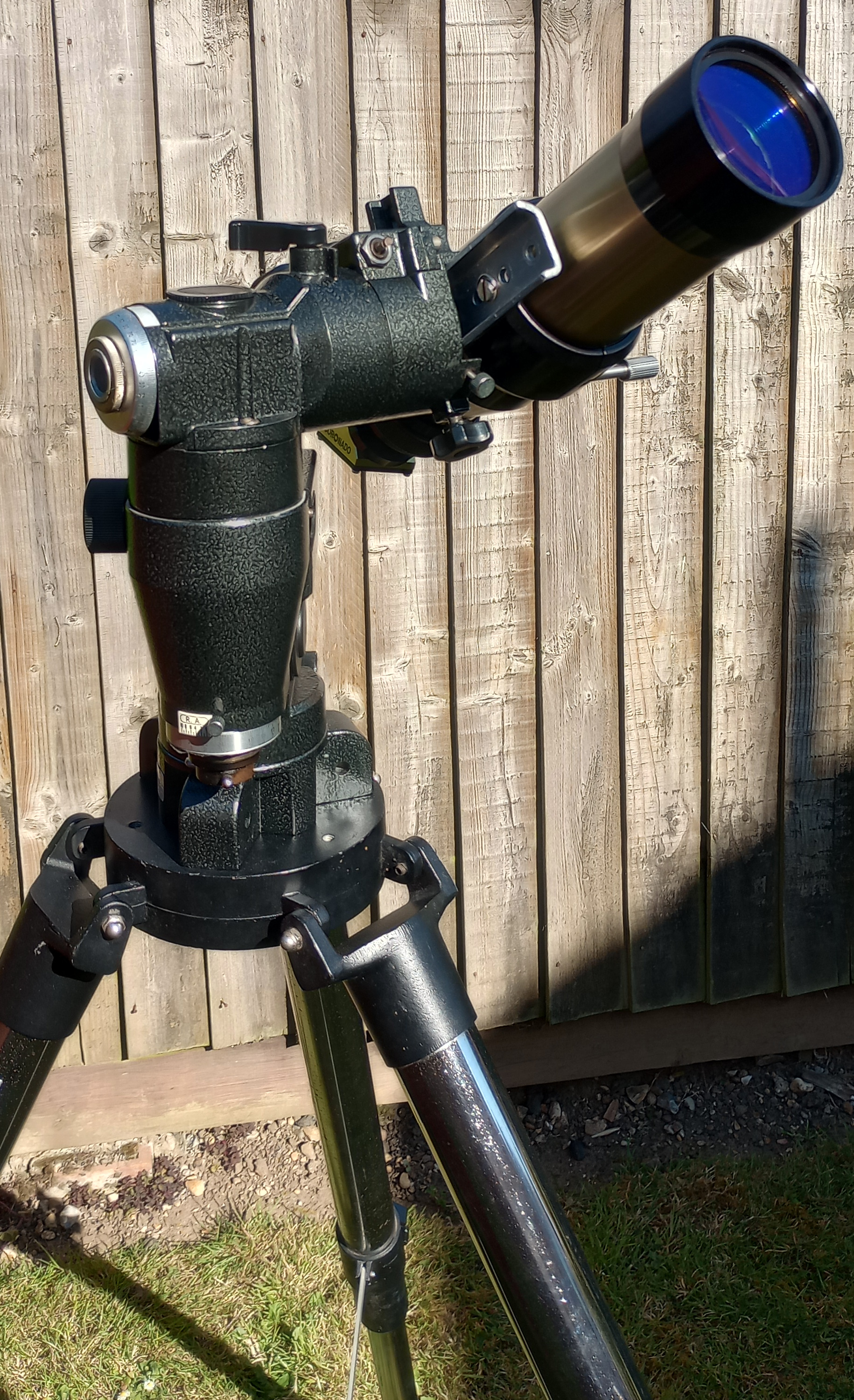
OASI's Coronada SolarMax II 60 mm Hα instrument and various eyepieces. The instrument is an introductory model, intended more for visual rather than photographic use. The image is relatively dim, around half the brightness of that produced by a Lunt LS50, making it especially challenging to pick out detail. I use the SolarMax on the EQ5 head and Meade tripod generally reserved for the Lunt LS35.
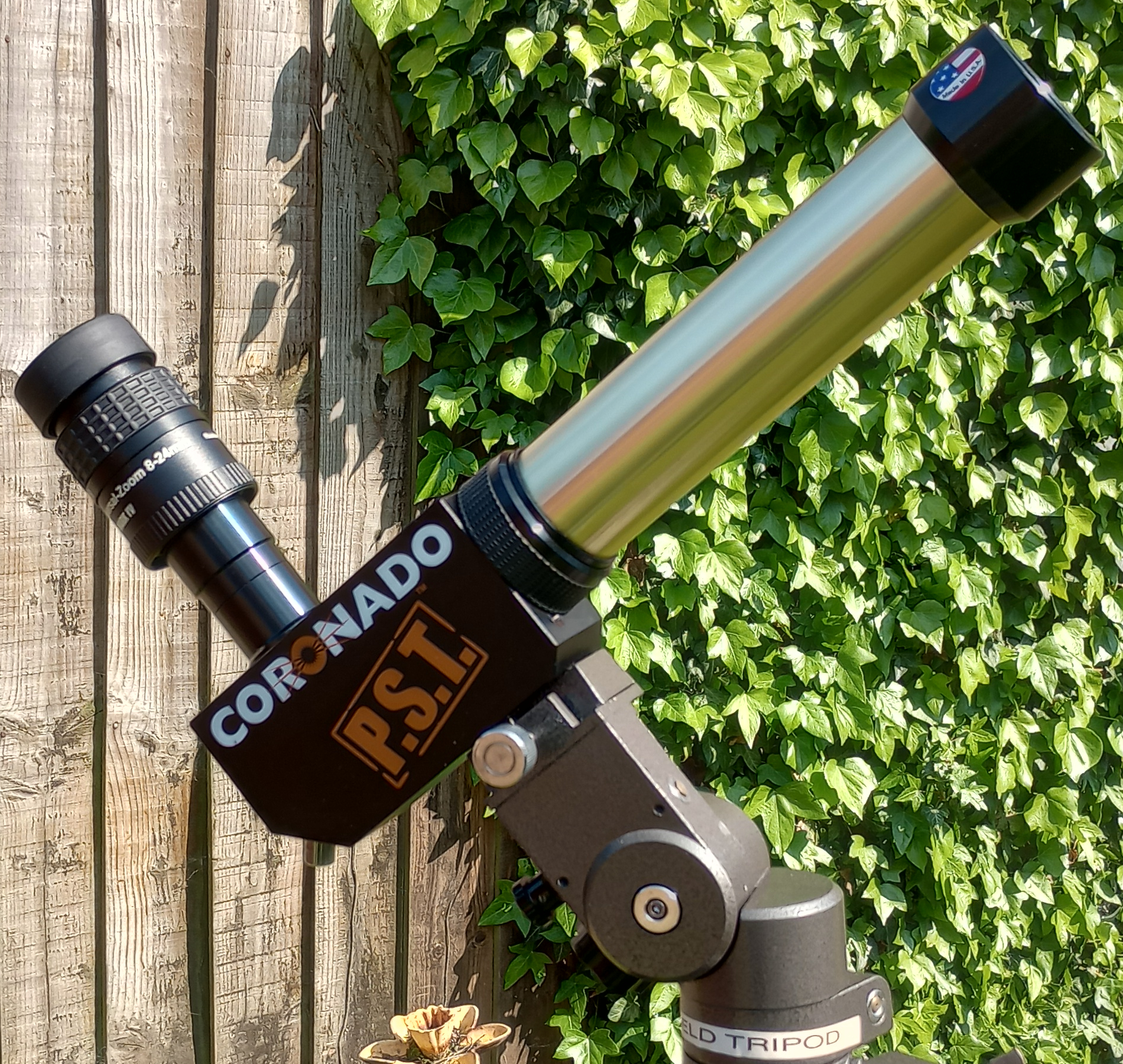
OASI's Coronada PST (Personal Solar Telescope) 40 mm Hα instrument and various eyepieces. The instrument is another introductory model, intended more for visual rather than photographic use. I use the PST on a lightweight field tripod.
My Celestron C4R 102 mm F9.8 refractor on a manually driven alt-az mount. To provide safe views of the solar disk in white light, the telescope is fitted with a Lunt 1.25" Herschel Wedge (diagonal) and an additional single polarizing filter fitted to the eyepiece (in accordance with instructions from Lunt). The eyepiece/filter combination can be rotated to adjust image brightness to a comfortable level.
My Tasco 60 mm refractor fitted with a Kendrick full aperture solar filter over the dew cap. The filter uses Baader film with an optical density of 5, making it safe for visual use.
Techniques
Sketches made at the eyepiece of the PST were produced using a pencil and/or crayons. Some of the resulting images were scanned and subsequently post-processed in Gimp v2.6.
Sketches made at the eyepiece of the C4R were post-processed as follows:
Scan image to PDF using an HP Envy 5646 printer/scanner.
Copy/paste image into Microsoft Paint.
Flip image L-R horizontally to correct the effect of the diagonal.
Add black oval/circle to mask the edge of the solar disk.
Save image then copy/paste into GIMP 2.6 (1024 pixel square).
Bucket-fill the sky background black. Touch up remaining spots around the solar disk (paintbrush tool).
Save final image.
Sketches were made at the eyepiece of the LS35 as follows. Initially, the etalon was detuned to a white light view. This allowed the major sunspot groups to be sketched, providing suitable anchor points for the remainder of the image. The scope was then properly tuned by adjusting the thumbscrew by one to two turns to provide an optimal Hα view with best contrast of features including prominences, filaments and active regions. This enabled the sketch to be completed quickly.